
Your Custom Text Here
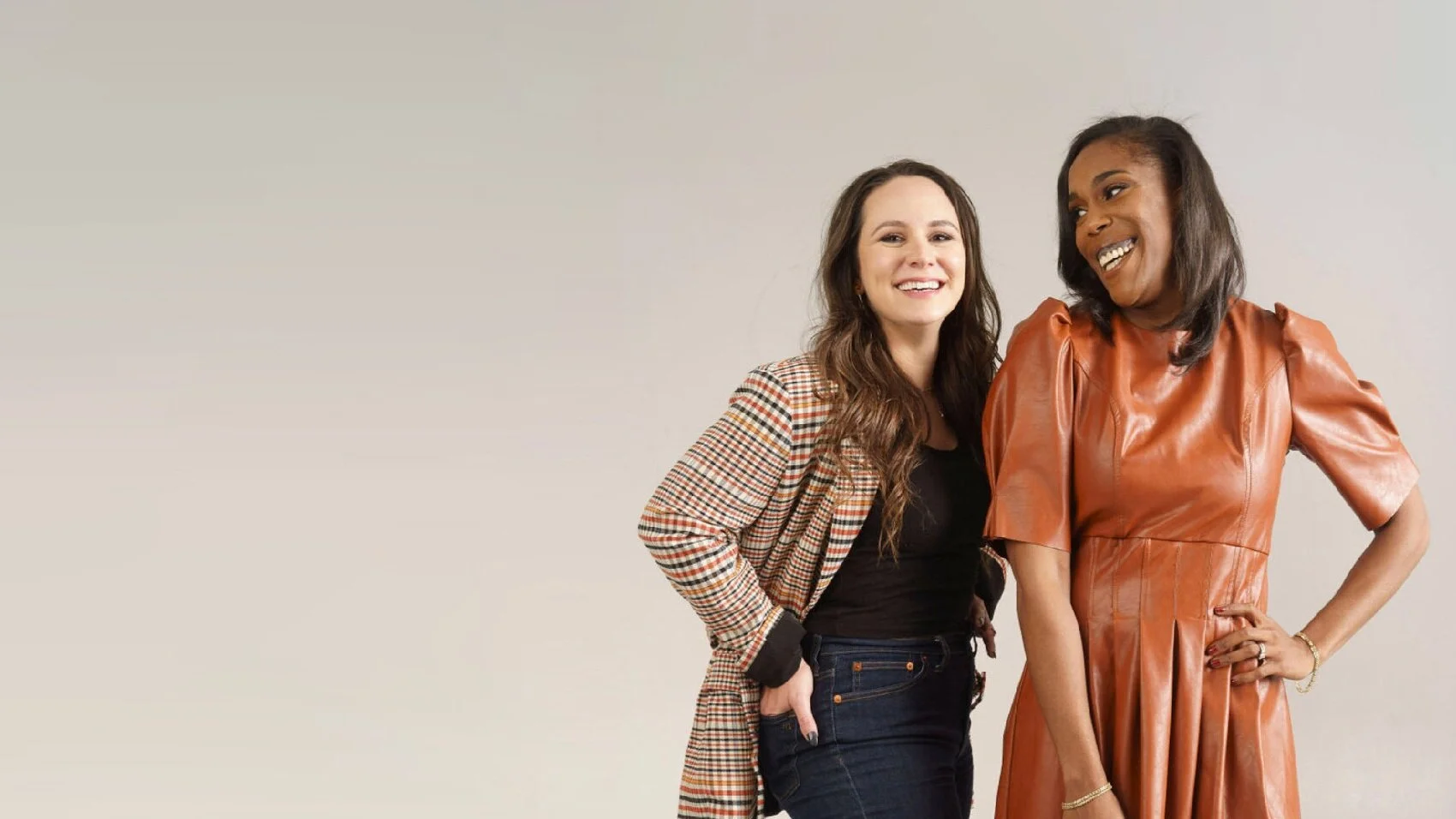
Ep005 - Everyday Magic(k) Part 1 - Kenya Raymer
If you have difficulty knowing and asserting your value, this episode is for you.
Thanks for listening to Wellness, Community, Magic, a podcast with a pro-donut, anti-racist, Glenda-the-good-witch agenda. In this episode, Ashley Brooke James and Elizabeth Moore step into their personal power with Kenya Raymer, (enneagram 8w7 SP). They talk about boundaries, yoga and DMs.
If you have difficulty knowing and asserting your value, this episode is for you.
Tune in next week for the second half of this interview, exploring tarot and magick with a "k."
Resources and Links:
Full Transcript:
[00:00:00] You cannot love and light your way to healing or alignment. You have to do the work behind it. If you want to be a light worker, you gotta be a shadow worker. Release the things that don't serve you and what doesn't serve you a lot of times is like your reaction to what is going on.
[00:00:25] That's the voice of Kenya Raymer, spiritual guide and truth speaker. Kenya came into this world to raise vibration and return people back to the heart space. She supports people who are going on a journey of healing, spiritually expanding and consciously stepping into their personal power.
[00:00:45] Hi everyone, I'm Ashley Brooke James and I'm Elizabeth Moore co-founders of TRILUNA, and this is the wellness community magic podcast. A podcast where we settle in, get cozy and talk hard truths about the [00:01:00] wellness world. We're here to take on diet culture by making self-care realistic, sustainable, and inclusive. We have a pro donut, anti-racist, Glenda- the- good- witch agenda, so join us on our journey to build community and redefine wellness. Let's get started.
[00:01:17] All right. So this is a question that I want to ask all of our guests, because I think we'll, we'll probably get a lot of personality download from this. But Kenya, if you were a donut, what flavor would you be? I would be a Krispy Creme, original glaze, and it has to actually be Krispy Kreme.
[00:01:34] The hot light has to be on. Very specific, which makes sense, because I'm very specific about everything in life, but it's a classic. It's a classic. Also it can be transformed into a lot of things. It's the foundational donut, right? You can dress it up, you can dress it down. It can be, it can be, you know, breakfast. It could also be dessert.
[00:02:00] [00:01:59] It's versatile. It's the best donut. It literally is. Like, it, it a hot one. Like, Ugh, it's amazing. I like the, the classic of everything. Like when I go to get fro-yo, I get the like yogurt flavor. When I go to get a donut, I want like a donut. When I get a croissant, I want butter. Like I love a classic. So talk to me about something magical that you've done this week.
[00:02:27] It's Friday. I don't know when you guys will hear this, but , Liz, what have you done? Well, actually I have spent the last week, every single second of the day, working on our new magic box that's coming out with our guests who is here today, Kenya. Um, and that has been a magical experience in and of itself to be like in the work of the work of the magic day in and day out. It has been a really fun experience.
[00:02:55] And I just have to let everyone know that she has been excited about these [00:03:00] boxes and I mean, this particular box, since, I mean, when did we talk about the boxes in August? And we literally had to say, we have to take the most popular the 31st. Jimmy and I, we were like, we just have to do these three right now.
[00:03:14] I mean, she, every day showed up. No guys, look, I put it together. She put the graphics together because she knows that we can't say no to a graphic. And I'm just really, I think I'm more excited about the box because Liz is so excited about every single detail that has went into this box. And Kenya Raymer, our guest who I'll introduce in just a second, she was very intentional about what she also wanted included in the box. And I think because we try to pack our experiences into these boxes, it just turned out to such a beautiful thing. I can't wait for you guys to see it. I'll stop talking. I'm going to introduce our guest.
[00:03:58] Our guest today is [00:04:00] Kenya Raymer. I have been following her for a very long time. I have been following her since, if some of our listeners are familiar with Curls and Cocktails, I have been following her since then. It was when natural hair was on the rise and it was just something magical about her and it wasn't just her hair. I mean, she's beautiful and our hair is beautiful, but it wasn't just that. It was just, I felt like she was really going to a place of intention and really speaking truth, setting boundaries.
[00:04:36] Something that people weren't familiar with at that time. And it made a lot of people uncomfortable, but now you, all you hear is I got boundaries. I have this. I have this. So I feel like Kenya was ahead of time before magic became a thing. And when I teamed up with Liz, it reminded me so much of [00:05:00] what I saw of Kenya.
[00:05:01] I was like, Liz was living that same type of life. She was bringing me into my magic and making me understand that. And so I'm really excited to have Kenya here today. We are excited to have Kenya here today. And my first question. I want to take it back. I want to start at Curls and Cocktails. So you were the hostess with the mostest. You would have these events from Atlanta to Nashville and just bring all of these women together in this just magical space.
[00:05:32] I'm sorry. I've never been to one, but I felt like I have because of the gram, but can you talk to us through those events and what was so special about those events to you? Um, so at the time, like you said, natural hair was like on a rise, right. Um, and everyone was having natural hair, this natural hair that, you know, come learn how to do a twist out, come learn about this product.
[00:05:57] And I just thought, wow. [00:06:00] That all sounds really boring. What I want to do is meet the women that I've been stalking and their hair. I want to meet them in person. Cause that was a big part of the natural hair community as well. Everyone was like showcasing their hair, you know, just gushing over everyone else's hair like, Oh my God, I love your twist out. oh my God, I love this.
[00:06:22] And um, that's how we were really expressing love at the time and, uh, showing up in support and in oneness for one another. And so I wanted to meet all the women that I was stalking online. And so I was like, how can I do that? I'll create an event where they'll all come and we'll all have drinks and I'll get to meet them and hug them and stalk them in real life.
[00:06:46] And so I was like, let me do one. And I did. And before it even ended people were like, wait, when is the next one? And I was like, wait, what? I was just trying to meet you all in person. And, [00:07:00] um, so I started hosting it monthly in Atlanta. And there became like, uh, uh, requests from a lot of cities, but at the time I was funding it and it was free.
[00:07:11] So like I was finding women who owned bars or clubs or restaurants or lounges that would host us, give us drink deals. Um, and there was no cover charge. It was free. Um, because I wanted to make sure that everyone had access to it. So it was hard for me to be like, yeah, I'll see you in Houston and yeah, I'll see you in, you know, Miami and, um, etc.
[00:07:37] So I did host a New York because I have family there. And so the New York turnout was huge. My brother-in-law's in the restaurant industry and so he hooked me up with a space and tons of women came out. It was crazy. It was amazing. I'm still friends like in real life. Uh, not in my head kind of situation with some of those old [00:08:00] school, natural hair bloggers, like, Hey, gorgeous.
[00:08:03] I mean, we met there before we even really built our platforms into anything. Then I moved to Nashville and Nashville was like, You're going to host one of these events here, right? And I was like, well, I hadn't really thought about it. Um, and I did, and then Atlanta was like, but wait, you're coming back, right?
[00:08:21] And so for a minute, I was going back and forth between Atlanta and Nashville, hosting these events for women with natural hair to get together and meet one another and kind of merge paths, create community. And it was awesome. It was magic. All the events look like magic just through, you know, watching it, like I said, I was never in attendance, but just being able to just see it.
[00:08:47] And I just have to tell you that was well-played. That's some creative stuff like that was very, very good. Liz, I know by being my business partner, you know, you've learned a [00:09:00] lot about natural hair and just black hair in general. We don't want to leave you out. Do you have any, do you have any questions maybe about the event? Well maybe I do.
[00:09:12] You said something that I want, I wanted to bring up anyway. And so you've already made the transition. So you said that you wanted to do it for free because you wanted it to be accessible. And in this, the magic and the wellness and the yoga space, we are often bumping heads against running up against the intersection of charging what you're worth and making it accessible.
[00:09:34] And I wonder if you would speak to how you navigate that and what that looks like for you? Sure. Um, so for me, I do everything like is guided. I mean, I don't know that I was doing it consciously, like at the time, but now I have an awareness, like I'm tapping into some, some gifts, some offerings are for everyone and are for the collective and other gifts, other offerings, they require a charge.
[00:10:00] [00:09:59] And for me, the charge is part of like what I'm worth and my energy that I put into my offerings. But also the charge is so that people who come to receive offering match the vibration of the offering. Because sometimes if you don't have a charge for something people will come up in the vibration will be mismatched.
[00:10:21] And so they won't even be able to really receive the offering or there will be some incompatibility between the offering and the person who's seeking to receive it. Does that make sense? Yeah. Yep. There's a different vibration between someone who's not willing to pay anything and someone who's willing to save something so that they can get a service, a product that they deemed valuable.
[00:10:44] One is invested from the beginning in the product or the offering and the other one is just willing to accept whatever they receive from it. And so vibration is important in what we offer and when it comes to [00:11:00] how much we charge for it. At the time I think I was just doing what I was guided to do. And I've always been someone who, I mean, I firmly believe if, if I do what I'm guided to do, I'm always taken care of. The universe will always take care of me.
[00:11:16] And so I think for each person, when you're making that decision, you know, do I charge, or is this a situation in which I am like, no, this is what I'm worth. I think the question to ask is what is in alignment for me with this offering? As long as you're in alignment with yourself, to me, it doesn't really matter what's going on in the rest of the community, in what's going on in the bigger picture. For me, staying in alignment is paramount and always my number one goal. And so at the time there was a lot of, a lot of pushback on it being free. My husband, who is a Leo and a natural born hustler, uh, was like, this is [00:12:00] absurd.
[00:12:00] Like you could be getting paid. Uh he's like, if you don't want to get paid by a cover charge, you could get paid by the bar or the restaurant. And there was a lot of creative ways. A lot of companies came in and offered me opportunities to be sponsored, to do partnerships. If I would just give away their product at the event, or if I would allow branding to be put up at the event, or if I would allow a small cover charge in exchange for whatever it is they were selling.
[00:12:32] And the answer was always no. Because that's not what I was being guided to do. I was being guided to make sure everyone felt that it was accessible as possible. So, you know, location, you know, not everybody could come to Atlanta, Nashville, or New York, but if you were in the cities where the offering existed, it was free.
[00:12:50] And so, yeah, I think for me, staying in alignment will always offer clarity around, am I charging for this? And if so, how much, or is this offering [00:13:00] free for the whole collective. Yeah, I'd love that. I think that's a really good take on that. We, we have talked a lot about pricing and trade and we even like last night I have a call with my best friends that I've had from second grade, like every other Thursday.
[00:13:16] And last night we were talking about trade for services. Like one of them had a photo shoot with a friend and the friend did it for free. And I was like, I love y'all. I'm not doing shit for you for free. Like, that is just not like when I work with my friends, like I'm, I'm a professional and I'm going to bring my professional services to you and I want you to treat me like professional. And in order to do that, there needs to be an exchange.
[00:13:40] It doesn't necessarily mean money. It could be something other than money, but I'm not just going to do it for free, unless it's like a cause or an organization that I really feel passionate about.
[00:13:50] But we are very protective of our boundaries around that. You're talking about vibration right there because what you really are wanting is for there to be some [00:14:00] type of reciprocity, some type of understanding going into the exchange that you're going to take me and my work seriously, and you're not going to flake or be late or whatever it is that happens, you know, among friends that you are like, oh my bad girl! Right?
[00:14:15] You wanting to go into it and enter in on an understood everyone's coming in on this vibration. And so for you to enter into that vibration, you're working under the assumption that there needs to be an exchange. And so we're saying the same thing. We're just reaching the vibration in the way that's in alignment for us.
[00:14:33] So I feel you. I have offered services to friends. I have offered services, shit, I don't know if I want to say this out loud. I'm going to be getting all kinds of emails, but part of my calling is to be of service to other women who are also helping other divine feminine step into their power, right? So it doesn't necessarily mean [00:15:00] they're a healer.
[00:15:01] It could be that this is what they're doing in their industry. Part of my calling is offering them guidance or services or readings or clearings for free. And so I have done that and it always doesn't end in a way that I feel like, "oh, I loved that," but I also have to remember that that shit wasn't for me. Like they may have gotten something out of it that I missed.
[00:15:27] I may have said something to activate something in them. I may have alluded to something, brought up a topic, asked a question that pushed something for them that triggered something for them that opens their awareness to something. I'm not privy to all of the unfolding that's going on. Um, I'm just kind of being obedient to my calling and to my guidance.
[00:15:50] And so do I, Kenya human, always love that part of what I'm doing? Sometimes no, I'm like, you didn't say thank you. I [00:16:00] don't think they get what I do. Or like, even like, I'd be like, Oh my gosh, Joe so-and-so came through and this is the message I'm like excited and into it. And it could be met with skepticism or okay.
[00:16:12] But maybe it's this how they're taking it in at the moment and later they're like "wow." Or not that I'm looking for praise, but like, they're just not in the same energy. Like I don't feel like we're matching energy right in the offering, but that's, that's not what's required of me. That's not what's being asked of me.
[00:16:31] Yeah. I think as healers we're often asked to, to give more than we receive. Yeah. For the higher good of what's going on here. Part of that lesson in that is everything I just said, it's all ego. That's all human going. Why didn't we connect? I didn't feel good. I didn't get it. Uh, that's all ego. That's all human, you know, but I do it anyway because like you said, we're answering a higher call or [00:17:00] acting in the service of a higher good.
[00:17:02] Yeah. And that brings this whole thing full circle because in the beginning, Ashley talked about how good you are with boundaries. And so how are you in your practice of magic, how are you creating those boundaries and still understanding that you might have to pour from a cup half empty? Yeah, it's a daily check-in with my team.
[00:17:23] It's why I have a practice. It's why I have a practice of movement. It's why I have a practice of grounding. It's why I have a practice of journaling. It's why I have a practice of connecting with my soul family to keep me plugged in to what I'm doing here. I communicate my boundaries really well and often, I always say, clearly and often. Are you pointing at me?
[00:17:45] You're really good with boundaries; sometimes better than I want. So good at that. Just got to make them very clear. People, listen. You can't get upset about boundaries if you don't communicate them, if you're not clearly communicating them. So [00:18:00] I clearly communicate my boundaries and often.
[00:18:03] And when I feel like a boundary has been crossed, I check in. And I'm like, "what is this really about this really about?" Is this about me? Is this about them? Is this about what I'm doing here? Did I overextend myself? Was I not clear in the expressing of the boundaries? Because sometimes you can express your boundaries very clear and a habitual boundary crosser is like challenge accepted.
[00:18:27] Um, and we have to understand that that shit is not about you. Not everything is about you. It feels like it is, it feels real personal when a boundary is crossed. Like I have a firm boundary on DMs. Okay. Because I'm really particular. I'm obviously, I'm an energy worker. I absorb energy. I interact with energy different than most people.
[00:18:52] Okay. I can open up a DM and I receive a ton of information from that DM. Okay. [00:19:00] So a lot of energy is coming in and it can be overwhelming. That may not be how I want to use my energy. So my boundary is I'm not allowing information or access to me via DM anymore because I'm controlling the flow of energy from that path.
[00:19:18] Also DM is like text and I think text is very personal. Not a lot of people have my phone number, because again, I'm very particular about who has access to my energy because I experienced it in a very heightened way. And so I really don't like when people DM me and it really upsets me when people start the DM with "Hey, I know you don't like DMs but," because that translates to, Hey, I know you have a hard boundary here, but fuck your boundary because I'm more important and what I need is more important. And so I need you to tune into me and my needs. Forget about you and your needs. Not important right now, Kenya.
[00:19:58] Um, and since I'm doing [00:20:00] this, I'm consciously crossing the boundary. I don't really respect you, but I do need something from you and I need you to give it to me now. And so that really upsets me. And so when I received those DMS, I always, it's a trigger. It's like, you're not safe in this space because you're not being respected.
[00:20:18] You're not being valued. You're not being heard. And so I immediately feel unsafe in the connection. My blood pressure goes up. I have a physical body reaction to it in addition to receiving all of that energy. So I always have to be like, okay, return to self, return to myself. I do some type of grounding.
[00:20:42] I'm doing breathing exercises. I may need to go outside and clear the energy that I just received. I may need to do some movement. I may need to write. And then I need to decide how I'm reacting to that boundary crossing. And a lot of times it's really just me checking in with myself, going "you're safe here."
[00:20:59] This [00:21:00] is about them. This is not about you. And you're under no obligation to respond or to defend yourself or to further reinforce the boundary. So I guess the answer to that is I check in with myself a lot and I try to understand that not everything is personal, not everything is about me, but I'm going to try and head it off with clear boundaries being expressed in the beginning because they can't be respected if you never communicate them.
[00:21:25] Yeah. You said something about when those boundaries are crossed, you return to the things that keep you grounded, whether it's through breath, work, whether it's through movement. So we found out that you were going to the same studio that Liz and I like yoga, yoga studio. Sorry, everyone. I mean, I think by this time, everybody knows that I'm talking about yoga probably.
[00:21:51] I mean, it is my life. So we found out that we were going to the same yoga studio, shout out to Kali yuga yoga. Liz and I [00:22:00] both were certified there. Can you tell us about how you found yoga? Like what brought you in that space and how you also incorporate that into your daily wellness, because .you mentioned that as well? Yeah, so I was living in Atlanta and one of my really close friends.
[00:22:20] She's a Yogi. And we were, uh, we're sorority sisters. So we met in college and then, you know, kind of went and did our own things in life. And then I moved to Atlanta where she was living and she was already teaching and had a practice. And we started working at the same gym. She was like, come to class.
[00:22:39] and I was like, I'm a dancer and cool on that. and at the time I was actually still professionally dancing so I was really cool on that. But, um, I went a couple of times and it was really hard for me at first, because as a dancer, the body positioning between yoga and dance is just very different. Well, [00:23:00] it feels very different to me, I will say.
[00:23:02] And so I struggled. Or, um, going into yoga and I don't even think I really liked it until maybe like a year or two of going. And I know I didn't even like understand the impact of yoga on my life until we moved to separate States. I moved to Nashville and she had moved to Florida and I wasn't getting her practice, weekly.
[00:23:28] And i was like, wait, I'm going to have to like find a new yoga house, like, and again, back to energy. I'm sensitive to it. And it was really hard for me to find a yoga house here, studio in Nashville. Well, that'll be another, we'll bring you back and we'll talk about that. And so it was really hard for me to find a space where I felt comfortable. And so I started remembering everything she taught me and creating my own flows and doing yoga at home in my own [00:24:00] space. And so I really created my own practice at that point in time. And then I had heard about Kali Yuga and what drew them to me is my girlfriend, monica is her name.
[00:24:12] We're also like eating, uh, ayurvedic. Is that how you say it? Um, I think it's ayurvedic. Okay. Aren't you certified in that? No. ayurvedic. Okay. That sounds better, ayurvedic. Can't say it, but we were following the program of the eating and like making sure our doses were balanced, like through food and that type of thing.
[00:24:36] So Kali yuga's whole schedule is based around this concept. And I was like, Oh shit, this makes sense. This is where I'm supposed to be. And when I went in it wasn't crazy packed. It was comfortable. It was everything that I really needed. And I stopped doing yoga for a while around when I got pregnant, but that's a whole other story.
[00:24:58] I picked it back up [00:25:00] after I had my daughter and it was a hard return to the mat. And now, I mean, now I use it. It's, it's part of my daily practice. My daily practice constitutes of gratitude, journaling, grounding, conscious relationships with food, hydrating, movement, nature. Like this is how I build and how I teach other people to build a daily practice that keeps you in alignment, or it leads a path back to alignment because no one can stay in alignment 24/7.
[00:25:31] Um, so through yoga, yoga is a path directly back to alignment when I've, I've absorbed too much energy. Where I'm trying to release some of my own trapped energy. I just had a big energetic engagement, whether that was, you know, a fight or argument or some type of tears or some type of triggering happening. Yoga will move that energy immediately and quicker than if I were to, you know, probably journal or do something [00:26:00] else.
[00:26:00] Nature and movement are the quickest ways to transmute energy. And so yoga is my go-to. It's part of my daily practice and it's important to me because it is a path back to alignment when shit has gone left. It brings me back to center.
[00:26:18] I think she just described us, Liz. She said nature, which is Liz and movement, which is really both of us but like, you know, you are definitely in the nature. I mean, and that's that just speaks to like how differently everyone finds what brings them alignment. I have found that for me, restorative yoga is an incredibly healing connective practice.
[00:26:42] And I think it is because, like you said, I, it gives me the space to observe what's happening in my body. Yeah. And I agree with you Kenya, when you said it's like the quickest way to push that energy. I'm a natural born mask filler. And yoga has brought me to a space where I [00:27:00] can push those things away, but I can return to them in a place of grounding and connection.
[00:27:06] And it's like, when we say things like release what's not serving you. It's not like, just let it go and forget about it. It's like release it into the universe and find your way back to it and figure out how you work through that. I mean, it's not. You cannot love and light your way to healing or alignment.
[00:27:27] You have to do the work behind it. If you want to be a light worker, you gotta be a shadow worker. And yeah, it's release the things that don't serve you. And what doesn't serve you a lot of times is like your reaction to what is going on. And so if you can get to a place where you can get back to your center, who you are at your core, then you can make some decisions on how you want to handle things from the truest version, the truest space of you, more so than reacting.
[00:27:56] You can be proactive about something. Handle something [00:28:00] consciously rather than unconscious, because what happens when we're triggered or when we are in someone else's energy or someone has overwhelmed us, or we've absorbed someone else's energy, is that we're acting from a space that's just like a little bit to the left or to the right.
[00:28:15] However you want to visualize it of our truest self, right? It's not exactly who we are. It's not necessarily who or what we would do or say if we were not in this heightened sense of emotion of experience. And so I agree, uh, it gives you the opportunity to be the observer. Observe what's going on. Observe like, like I was talking about in the boundary crossing situation, I'm like, it's really going on here.
[00:28:46] Why are you freaking out? And before you reply back to this email or this DM with some shit you're going to regret, let's take a beat. Let's hit the mat. Let's go outside, return back to your center and then make a conscious decision. It's [00:29:00] not like, Oh, I'm going to love and light and release it and this never affected me.
[00:29:04] No, the shit affected you. Figure out why. And then move forward from that. Liz, why don't you close this out or you want me to do it? So you can find Kenya Raymer on Instagram, her Instagram handle, happy truths. Is that right? Yep. Happy truths. Well, we appreciate you. We're going to have you back.
[00:29:28] Everyone that's listening, because Grace has giving me the eyes, the box is going to drop on January the first. January the first you'll be able to go to TRILUNAwellness.com and go under box collection. And Liz is getting really nervous right now because she knows. All right, Liz, I think that's it. That's all.
[00:29:51] All right, we'll talk to you guys later. Thank you for listening to the wellness community magic podcast. We're [00:30:00] excited to share our thoughts with you and bring compassion to the wellness space. Take what you've learned today to a friend or colleague and tune in next time for more tough but necessary conversations about the future of self care.
[00:30:12] If you are interested in learning more about TRILUNA or are pre-ordering one of our wellness gift boxes for a loved one, check out our website at TRILUNAwellness.com.
Ep004 - Equal Opportunity Thirst Trap - Brynn Plummer
In our first interview of the season, Ashley Brooke James and Elizabeth Moore, co-founders of TRILUNA, sit down (virtually) with Brynn Plummer, Vice President of Inclusion and Community Relations for the Nashville Entrepreneur Center and founder of Dissocialite Design Co. Dissocialite works to destigmatize mental illness through playfully designed apparel and goods.
TW: Eating disorders, body image
Brynn Plummer
Enneagram: 7
Donut of choice: Krispy Kreme Strawberry Iced with Sprinkles
In our first interview of the season, Ashley Brooke James and Elizabeth Moore, co-founders of TRILUNA, sit down (virtually) with Brynn Plummer, Vice President of Inclusion and Community Relations for the Nashville Entrepreneur Center and founder of Dissocialite Design Co. Dissocialite works to destigmatize mental illness through playfully designed apparel and goods.
Today we’re talking about curiosity, mental health, and thirst traps.
Tune in next week for a conversation around setting boundaries, stepping into personal power, and intentionality.
Resources and Links --
Instagram:
Twitter:
Read More:
[00:00:00] We would like to open this episode with a trigger warning, as it contains discussion of eating disorders, body image issues, and or weight loss or management. If this does not feel safe for you at this time, please skip the episode and come back to it if, and when you're ready.
[00:00:18] It was when I was like logged into my friend's feed, then I was like, Oh, this is like, I'm seeing skinny white women. Like I hope I almost never see thin white. Someone's about to get popped. Somebody doesn't like skinny, white woman. There's maybe some bias in the tone. That lovely voice that you just heard was Brynn Plummer, Vice President of Inclusion and Community Relations for the national entrepreneur center since 2018. She's also the founder of Dissocialite Design Co. Dissocialite works to de-stigmatize mental illness through playfully designed apparel and goods.
[00:00:54] Brynn was born and raised in Greensboro, North Carolina. After graduating from Columbia, she moved to Nashville in [00:01:00] 2011 to join teach for America. She taught middle school, English and social studies before working on the teach for America staff for five years, mostly doing diversity and inclusion work.
[00:01:09] Today we're talking about curiosity, mental health and thirst traps. Hi everyone. I'm Ashley , James. And I'm Elizabeth Moore co founders of TRILUNA and this is the wellness community magic podcast, a podcast where we settle in, get cozy and talk hard truths about the wellness world. We're here to take on diet culture by making self-care realistic, sustainable, and inclusive.
[00:01:37] We have a pro donut anti-racist Glenda, the good witch agenda. So join us on our journey to build community and redefine wellness. Let's get started.
[00:01:52] So let's talk about donuts. You said strawberry iced with sprinkles. I think that is a [00:02:00] delicious donut. I think five daughters has one of the best strawberry donuts. Ever. Yeah, why did you pick that donut? Well I'm a Krispy Kreme gal. I should say I am from ... I'm from the town next to where Krispy Kreme was founded and that Hotmail sign that drove our life, Bro.
[00:02:19] Let me tell you driving down battleground Avenue. Like if I was driving down, I would just, we'd text the family, like, Hey guys, just so you know, the Hotnow sign is on, like, it was very much a thing that was like the Hotnow sign to this day. I just want a shirt that just has Hotnow on it. I just got a text, I literally just got a text Monday night and said from my best friend group was like, the hotnow sign is on and I'm going, and I was like "Dang it!" Brynn, maybe that needs to be your next shirt.
[00:02:47] I think it is. I wonder if there's copyright on it because that's it's the most. Yeah. And so anywho, Krispy Kreme strawberry iced with sprinkle donut is like, I like all Krispy Kreme donuts. I'm particularly a fan of lemon filled, but that one [00:03:00] is, I think, whimsical, colorful and you get the original glazed underneath it.
[00:03:05] Like what's not to love, you know, what's not to love. The original glaze is something about that original glaze. So we have a couple of questions. I'm sure we'll get off topic. We'll just talk because that's what we do here at the wellness community magic podcast. We just talk. So you work with entrepreneurs on a daily basis.
[00:03:27] What advice would you give to the entrepreneurs for cultivating a strong community? That's a good question. Okay. One, people are searching for identity and purpose and to see themselves a lot right now. I think you can see it reflected in just the rise of something like a Nexium or, uh, even some of the, you know, multi-level marketing schemes that are out here. Even the way people are adherence to things like, um, astrology [00:04:00] or Enneagram or Myers-Brigg like people are trying to find meaning about themselves and also higher purpose. So I think giving your audience and your customers a higher purpose and also giving them an invitation to be part of something that you're building is meaningful.
[00:04:19] I think a lot of us right now are going culturally going through this shift where, you know, in our parents' generation, it might've been, your job was your identity. And now I think for people who are my age, they sort of elder millennials, we are, uh, realizing our jobs don't, we don't want our jobs to define ourselves, but there is a real absence of meaning beyond that, unless you, um, have a religion or a part of a community group or a part of a, something else, some other kind of higher identification order that gives you meaning.
[00:04:51] And so giving people a meaning and a purpose through your product, whatever it is, is important. Um, that also, and then that will also bind them to the community and make them part of a [00:05:00] community. And then, two, using your, uh, user or your consumer using their words, using their images, using their, um, participation in your brand as the stories that you're telling. So you're not just like, Hey, you got this, you bought this product. I'm so glad you bought it. You're not just thinking them individually. But you're also saying to the rest of the buyers and users, this is who's part of our community. This is who's part of us. And so that people buy people, buy and people become part of the brand because they're like, Oh, that person is like me. People like me are part of this brand in this community. So it's reflecting back who are the members of the community so that more and more people can find identity within that community and can see themselves reflected in it. So I guess summing up purpose and then, uh, reflecting back who the members of the body are.
[00:05:46] And, uh, showing that it's a really wide net too. I think that's something that matters a lot right now for brands, especially if you were attracting millennial or gen Z customers. So Brynn, you have done this in [00:06:00] such a phenomenal way with Dissocialite Design co. I was like early, like as soon as those were out I was like I want that, have that.
[00:06:08] So tell us about Dissocialite Design Co and then I'll say which one I got and we'll go from there. Good. Okay. So, uh, Dissocialite Design Co is, we are a company that is aiming to de-stigmatize mental illness and raise awareness about mental health more broadly through playfully designed wearables and goods.
[00:06:27] So we primarily started in apparel, sweatshirts, t-shirts. And now we've branched into a few other products, um, hats, tote bags, dog clothing, drink tumblers, um, notebooks. And the idea is, um, it came about through quarantine and talking with a few friends of mine. And we were kind of just marveling at this reality that we were in, where we were continuing to do work, put out work, maybe even putting out work at a higher pace or higher volume through the quarantine. And we were all like, but we are [00:07:00] really depressed. We're really depressed and we're not okay. And we're scared and feel terrified every day. And the, it sort of came from there. Like if there was a way to signal to the world, Hey, I'm not doing great today and, or I'm here. And also I'm anxious. Like I'm here and I'm present and I'm also anxious and take the whole bundle baby. If there was a way to do that and then also to give people the tools to talk about those things on masks, then that could possibly be a tool to raise the consciousness of our entire community.
[00:07:32] So if it becomes not, you know, if there's only one person in the workplace, you're saying I'm really anxious today, and I'm having a hard time today. If there's only one person shows up and the attention goes on to that person, but if there are, you know, five or six people within a workplace who were saying, yeah, I'm anxious and I think part of what, maybe what's going on to make me anxious is part of this and, or even if it's not part of this workplace or this environment, a lot of us are bringing that to work. Maybe we can start to make some [00:08:00] interventions that are more structural or systemic as opposed to at the individual level.
[00:08:04] So that's really what Dissocialite is about. It's about a way to talk about and show your own personal mental wellness, where you are in your mental wellness or, or mental illness, if that is where you're at or what you're exhibiting. But it's also a way to connect with other people who are members of that particular community.
[00:08:21] So for me, I identify as like a high functioning depressive and someone who has generalized anxiety disorder and intermittent sleep issues go through periods of being really up there at periods of being really low. Big, seasonal, affective disorder, seasonal depression person. And, uh, there's a lot of people like me out there so it's been really, for me, instructive to connect with other people and find and find out how they're managing and dealing. I've also been really interested in the buyers of Dissocialite because they tend to be like some of the most ardent early adherence people like Elizabeth are probably some of the most bad-ass, high achieving.
[00:09:00] [00:08:59] They're not the mold for what people think about when we think about mental illness, you know what I mean? And I think in some ways that speaks to how ubiquitous it is. And also the resilience of people to find ways to either use their mental illness or wherever they are in their mental wellness journey as an accelerant, or to work around it or a workaround or what have you but there's a real resilience in the community too. And I think that's part of it too. Like it's, doesn't have to be this heavy, heavy, heavy thing. It's more of just, how would you talk about, you know, having allergies? How would you talk about, um, having celiac disease. How would you talk about these things in a way that makes them commonplace for us to talk about them and not so heavy?
[00:09:40] Yeah. So when we talk about community, we're a very community based wellness company, because we believe fundamentally that you are as well as your community and that your community and your part in community has a part in your wellness. And one of the stories that I tell all the time, and we've already told on this podcast once was that I [00:10:00] discovered that unwanted intrusive thoughts were a thing when I finally admitted to someone that I was having them and they were like, Oh, that's called this it's common people do this. It's okay. And all of a sudden, a whole world of therapy, solutions, thoughts, processes, healing, were available to me because I had been vulnerable enough one time to tell someone something and they responded in a way that was like, here, let me bring you into my community. Let me tell you what I've learned and here's how you can move this forward. So as soon as I saw, so I have this incredible bright orange shirt with it, is it a rabbit? It's a rabbit, right. And it says unwanted intrusive thoughts.
[00:10:41] So it's like, not only am I like reclaiming that for myself and saying, look, here's the thing I have. Here's the thing I'm learning from and dealing with and what I'm doing about it. And also, I don't have any shame about it, at all. This is part of me. This is part of the way my brain works. And I'm here to say that I have it.
[00:10:58] And also to say, if you [00:11:00] have it, if this is something that you're curious about, if even the name of this makes sense to you, you can come and talk to me about it. I have it on a bright orange shirt right on my chest. Like, come talk to me about it. And that is, to me, what is so powerful about vulnerability and community together.
[00:11:17] I love that. I love that so much. I think that's also, I mean, language is helpful. I mean, language is so many things. It can be oppressive and this, but language, particularly as it pertains to wellness or medical journeys, all that stuff, all the solutions to your point, derived from that language, like having a term to describe this thing, you feel connected to other people can actually read everything you're saying is exactly, like you could write the Dissocialite copy right now. I would be happy to. And you know, honestly, like part of it is I always like side eyenpeople who like say things like social media will be the end of us or whatever cause it's usually like a white man on a [00:12:00] podcast who's always had access to seeing himself. And uh, it's anywho, but shout out to Tumblr because I feel like I've found so much of my identity and so many ways to talk about myself as a kid on Tumblr, on my space. And now Instagram, I think has become this amazing democratized way to find out about mental health, to find out about different things we might experience to find out about sexuality, to find out about, uh, different phenomena that are in our lives.
[00:12:33] I mean, some of the things that we talk about with the Dissocialite are some of the things that are like printed on the t-shirt of Dissocialite are words that are exclusively found like in the DSM-5 or things that you might not get access to unless you could spend thousands of dollars or hundreds of hours in therapy and Instagram has made it possible through the way that a lot of psychologists and counselors and mental health practitioners like Nedra Tawab and folks like that are using it to kind of give [00:13:00] access to this broader world of understanding yourself like access to working on one's mental health has been incredibly inaccessible like the ability to work on yourself from a mental space down. And the psychological space has been incredibly inaccessible for almost all of human history or undervalued, devalued, whatever. It's a very new science, right. But because of Instagram and platforms like that, people are now finding language and tools to talk about things so that you don't have to be someone who has hundreds of free hours and thousands of extra dollars who can go get this, this, this learning. And so I really credit Instagram, uh, in a lot of ways for teaching me things about like on one interest of thoughts, trauma responses, recovered past life stuff. I feel like if I didn't have this platform, it's just, which started as a picture sharing app.
[00:13:51] If we didn't have this platform, I think there's so much knowledge that would have just been, I would have had to wait years and years to get to. And I feel [00:14:00] really inspired when I look at folks like gen Z'ers who are using tik tok to share these ideas and are exploring phenomena that I have baby boomers who really like the content.
[00:14:09] Like my mom is learning things about her mental health through Dissocialite. And I think that's really powerful thinking about this next generation of kids that are starting out at the gate, knowing these different words and things and phenomenon and ways to describe the everyday experiences that they have. I think they're going to be so much more, they're just going to be able to go farther, faster. I think in a lot of ways, of course, they'll have a climate climate crisis and recession and everything else to deal with, but they'll know how to describe and label the things that are coming up for them as they go through those things.
[00:14:42] Yeah. That's uh, the, the talk about generational mental health is really interesting. I, I, our parents that was just like, not part of their lexicon. It was not part of their life. My dad's in his sixties and just this year, he said, I have anxiety. And I was very [00:15:00] aware of it because I have anxiety. Like I know these things, you know, and I, I, I look back to just certain situations growing up and how he would respond to certain things. And like you said, we just didn't talk about those things. Our parents didn't talk about those things and we have created, and I think that's why our brands aligned where you have created a space for people to speak openly about things like intrusive thoughts. We have created a space where people to be able to talk about those things, as well as their physical wellness, that things that the world has told us that are going to work for us and making us feel like, again, we're not well enough.
[00:15:42] Instagram has been both a blessing and a curse. I think at the height of my eating disorder was like when we were just starting to get into the like MySpace, Facebook world was really more my space when I was in high school and Facebook you could only get with a college address, [00:16:00] which I did not have, but that was like when I first started really being able to massively compare myself to other people on a broad scale and not just people who were celebrities, but my peers, right. And so it became a tool that amplified my body dysmorphia. But it also, once I realized that that wasn't what I wanted and I started curating my feed more carefully and I got into body positive, which turned into body neutrality and the kind of the journey there, it also became a tool for me to unlearn. And so I think the idea of getting really careful about how you curate your feed and how you pick things that show up for you is really important and will be even more important for younger generations as well. That is, Elizabeth, just come over here and just write, write the thesis. Okay! It is one of [00:17:00] those things I do think it's, I don't, I hate to use the word.
[00:17:02] I often think about like, uh, you know, what is your media diet? And I don't even like to use the word diet per se, but I can't really think of a better word, but like, what is your media intake? And, you know, I had this. Interesting moment when I realized that my Instagram feed was wholly different from my friends who were thinner, white or what have you, because my feed is extremely queer, gender non-conforming, black, specifically medium and darker skin, black, fat bodied, very fem centric and very anti-capitalist and just very, uh, different. And it was when I was like logged into my friend's feed, then I was like, Oh, this is like, I'm seeing skinny white women. Like I don't, I almost never see thin white women.
[00:17:54] Somebody's about to get popped. Somebody didn't like skinny white [00:18:00] women. There's maybe some bias in the tone. I think that, I think so. I think we're seeing what's going on over at that house, which is funny cause I like have so many friends who are thin white women, but I also like, anywhere you look outside of my feet is thin white women, you know? And so my feed is almost, uh, an antidote to a lot of what the mainstream is. And I think, um, learning is a great way to talk about it because once we know what we're looking for, we have, now, the tool to work in opposition to the thing that we're consistently being fed. Like it's nice to me that my feed is advancing ideas that are really radical to me and are very rooted in liberation and radical imagination about what our society could be, because I can get the mainstream idea of society or the very nationalistic idea of society. I can turn that on, that fire hose on, when I turn on the TV, I can turn that fire hose on it any time, but this is sort of a way to rebalance what I'm seeing and what I'm feeling and what [00:19:00] I intake as truth, right. I do think there is, there is some curation, curation is such a great word to use. I love that word that you shared Elizabeth, because that there is some, some dials you have to turn up and turn down. But I also think that there is something particular about comparison that I, I think, I think different groups experience comparison differently.
[00:19:19] I think for CIS straight. I mean, there's been studies on body image done across racial groups for young women and usually young, white CIS straight girls tend to have a higher rating on like their friend's opinion of their body mattering a lot more to them than a girls and other racial groups. So there is more of an identification with the more we identify with the mainstream tends to be, or the more we see the, the mainstream has giving us access to, uh, the life we want to live. Like the more I opt into the mainstream, the more I can live the life that I aspire to live that tends to correlate with pressure, to live into that mainstream that tends to correlate with a preoccupation, [00:20:00] with a certain ideal.
[00:20:02] And I think because there's never been to me like an idea put up with like, what is the ideal fat black woman? Like there's never been an idealized body or person that, that is a fat black woman. Like if you think of the ideal woman that society would paint, it's not anything close to me. I think if you would think about like the idealized and now in our society, the idealized fat black woman, you might think about like a Lizzo and I might have more access to that.
[00:20:27] Um, and in some ways I don't as well. Like she is incredibly much more physically active than I, if I had to do a Lizzo show I would die in the first three songs. Like I couldn't, I don't have the stamina baby. Um, I'm out after the first one, I've seen her perform multiple times and every time I'm like how, where from what, from what well does one draw.
[00:20:48] So I think there is something about our ability to see the mainstream as something toxic or as something aspirational that does do a lot to change how we [00:21:00] view these tools, right. I even think about something like, um, You know, I have a lot of dear friends who were really into Pinterest for awhile because it gave them a way to curate meals but Pinterest definitely fueled a lot of stuff around clean eating, "clean eating". I'm putting that in quotation marks for the audio people, a lot of stuff around food and morality, a lot of stuff around disordered eating. Um, And Pinterest, I think in particular is used by a certain, it makes sense. Like if you think about the kind of person who is using Pinterest, she fits all the things that also are correlate with being more likely to be involved in disordered eating like perfectionistic tendencies, definitely someone who like pushes herself, maybe type a, all of these things that also correlate with being like a really, really amazing successful person, too. So it's very, very, very tangled and, and seeing them as tools and not necessarily as truths; [00:22:00] they're not necessarily Gospel. They're just ways to turn up and turn down the dial on what we're receiving. I think is really helpful. Um, and I do feel like the faculties that younger generations have, gen Z's and I think some, some of us millennials to the faculties, we have to see everything as just a, a source will hopefully, hopefully help people use them and engage with them more as tools as they grow. And who knows what the platform will be in five or 10 years, who knows how that will impact our, our sense of wellness and community.
[00:22:32] I don't know if it will be things like tik tok where, you know, you have people participating globally in trends, and that kind of binds you to a community or you have people elevating things like very, very, very niche. Like Tik TOK is so good at getting a niche culture. I found myself on wood shop teacher, Tik TOK, well, not too long ago. And I was like, how did I get here? It's very, very niche carriated. [00:23:00] I think you've opened up a lot of Tik TOK doors in my life just following you. I'm like, who who what. I mean, especially the fine man and I'm like. So here's the thing, I think we would be remiss to talk about Instagram and Tik Tok without mentioning your COVID Cuties, which was, if I may call it an equal opportunity, thirst trap, where everyone is represented and everyone is made lovely. And it was a true source of joy for me at the beginning of COVID. Will you talk about what that was, what that project felt like for you? Yes. Well, for one thing, I am, I identify as a maximalist. I can't get enough of anything. I want everything. I want to do everything. I feel very much the pressing down of the number of years on this earth all day, every day.
[00:23:48] So I feel like if I have an idea, if I have something that I'm interested in, I just have to run with it. And, um, so I have about five or six different Instagram accounts that are just for like my weird little niece things. And in quarantine [00:24:00] I've like learned French, learned French... I've done duolingo, started to play ukulele, like started painting, gardening, all this stuff, like just random stuff. Like, I, I love stuff. I like to get real deep in a thing. And the thing I got really deep on at the beginning of quarantine, I think existentially my terror drive was in full swing. So I was supe randy. And so I got really into, like, everything was like that that's hot, that's hot. What's going on. Like, I would be scrolling through ASOS to look at some clothes.
[00:24:32] Like I bought my husband some clothes for his birthday in April. Like I would be on ASOS looking at clothes and I'd be like, who is this? And then I would find out like, who represents this model? Where does he live? I'd follow his Instagram. I'd be like deep in the computer finding because I was just so thirsty.
[00:24:51] I was very thirsty. I think my drive to procreate was high. So I started COVID cuties, which was a campaign to just showcase hotties [00:25:00] that I found on the internet. And sometimes just be like a Tik TOK, or it would be someone on Instagram who has like, look at this fricking Bae. Sometimes it would be my friends who I would see in quarantine. Like I, the first person that I saw a lot during quarantine was my coworker, Jeremy. Um, just go ahead and say, I'm gonna just go ahead and say, I'm a, just go ahead and say it because he's going to listen to this.
[00:25:25] Jeremy I've loved you from the first time that I saw you.
[00:25:28] This is Ashley. I just have to say my husband knows like the people around me, they know Jeremy, this is me coming to you. A hundred percent and Jeremy has no Instagram. So I would be like, Jeremy, we'd be at the EC and I'd be like, Jeremy, can you please just pose just a little bit, just for me, and I would just like take six pictures and be like can I put this on COVID cuties?
[00:25:50] And he's like, sure. And it would be like Jeremy and his mask or whatever and like posing in front of his fricking motorcycle he got. Um, so we were, I was just like, [00:26:00] you know what, baby? You're the prime COVID cutie. No, of course. There's nothing disruptive about Jeremy being a COVID cutie. He's like six feet tall.
[00:26:07] He's basically a dang hanger. Um, and he's, you know, tan, tan, white boy with Brown hair and Hazel eyes. Like there's nothing disruptive about Jeremy's hotness, but I do think there is something about....
[00:26:20] I mean, I will stop you when you're wrong. Keep on going and keep, let's keep this conversation about Jeremy going. Again, Jeremy, this is Ashley. I am crying.
[00:26:33] But there was, I do think there also was, not only wasn't it a place for people because people might, my DMS were flooded. People were like "holy shit, what are we gonna do? This fireman so hot? What are we going to do about this? Like, it looks like a, it was approaching a public, a public crisis. And at the same time, I think existential thirst trapping is real.
[00:26:55] There is something when you think, when you realize that your body is a mortal thing [00:27:00] and you don't have it forever, I think it makes you. Thirst trap. I think the, I think a natural reaction is to be like, let me, let me preserve because one day I'm going to be, I'm not going to have this body. Let me take a picture of it today.
[00:27:13] Let me take a video of it today. Let me share it with the world today. Uh, it is my conduit to connect with people. People were missing touch, all these things. So I felt like it was a great time to be thirst trapped in a great time to thirst trap cause we were all at home, not getting touched enough, not getting loved enough, not dating for my single friends.
[00:27:32] And it was just one of those things that I think it was sort of like lightening in a bottle. Like everyone was super bound wherever they were and really engaged in it. And then also people were putting out phenominal content, like I got really into boudoir photography of just myself over quarantine. I have a frickin photo backdrop now. I have a frickin, you know, I'm not a vlogger, but I have one of those vlogger ring lights. This, this room is my guest is our guest bedroom. This is where, this is my set. This is [00:28:00] where I do my things. And it's just pictures of myself that I share with no one, but my husband and my girlfriends. So I'm like, guys, look at this, look at this as it is.
[00:28:07] Yeah. It's just one of those things where like, what we don't have is touch. What we do have is horniness and what we have access to is just basically our phones and our own environment so let's give everybody access to this stuff. I love the idea of existential thirst trapping as like an empowerment tool.
[00:28:25] I love it. It is incredible. And I love the fact that we've spent the last 20 minutes talking about thirst trapping plus Jeremy. So, I mean, I have the best job in the world. I do find too that like, like dissociation is a big part of my own mental illness and the way that I respond to the world. Something about seeing your own body reflected back is a powerful antidote to feeling dissociated where you feel like, " is my body real? am I here?" Whatever, like, Taking your own photos, seeing your body in space, all that stuff is like a really powerful antidote to [00:29:00] that feeling of dissociation. Like what is real? It's like my body is actually here and like, this is what my body actually looks like right now in real time. It is one of those things that I find incredibly reality making, like we're actually here, we're actually in our bodies.
[00:29:12] Like I'm actually on this plane of existence and someone can see my body and look at my body. Isn't that interesting? I'm not just a consciousness floating around in the world. Um, I've been thinking about this a lot. Like when I get messages from people that are excited, it usually is it's, it's usually about the content, but it's just as much about, I really just like to see you living life.
[00:29:36] I don't think we have a lot of examples of people who feel unbound and it's, I mean, I do, I mean, I reigned it in because some of the things I'd be wanting to post I'm like girl you have a job and like, I remember when I posted the Dissocialite announcement and I had taken a boudoir photo where I was wearing like a high cut brief and my, my husband and I didn't when my husband saw the [00:30:00] next day, I didn't tell him anything about launching Dissocialite.
[00:30:01] He just saw it on Instagram and found out like the rest of the world. And when he saw it, he was like, Oh, your butt is, your butt is, it's in this photo. And I was like, Yeah, I guess I should've thought about that more. He was like, I just didn't, I wasn't expecting it. And it was just one of those things where I, it's not even about what is shared or whatever, but it's really more about the spirit of it. It's just like play, whimsy. I don't feel very, the things that mattered to me and the things that are important to me are very like baseline, non-negotiables like, we're not going to be homophobic, transphobic, queer phobic. You know, anti-black like, those things are very clear to me and I'm very serious about those things because they don't feel like they feel like such obvious and clear truths to me. Like when something is, goes against them. I can look at it like, can you believe this foolishness? And I think that spirit of like, I feel so clear on those things and like that I'm here to do something [00:31:00] I'm in service of something that's probably not going to come to fruition until six, seven, eight generations from now that it gives you a certain freedom when you're like the things that I do in my life don't matter that much. The things that I do in my life don't matter.
[00:31:11] It's like Fannie Lou Hamer said like, if I die, I'll die five feet and four inches closer to the, the freedom line. You know what I mean? Like I'll die, like I'll fall, whatever distance I fall forward, that's how much closer we'll be to the wherever freedom is. And so I think that does give you a sense of, this doesn't matter, but not in a nihilistic way, but in a existential way.
[00:31:34] And it's like, we are in service of something. The best thing I can do if I think about all the labor that went into me existing...The best thing I can do is live free. If I think about my mom working third shift at the post office, or my parents driving to three different schools to get us to different schools or like hustling and scraping by to send my siblings and I to a private school for different parts of our life.
[00:31:54] But I think about those things or like every recital or play or whatever they went to. What [00:32:00] choice do I have except to be free and grateful to be here? Like the best thing I can do to pay them back is to be the little weirdo that they wanted to exist. Um, I don't think any of us have had access to feeling free in many, many, many generations, maybe ever.
[00:32:18] And I'm certainly not free in a sense that like, I still got to pay this mortgage and stuff, but I am free in the sense that what I do here in this time matters less than our, all the people around you, are they on a pathway to getting free? Are they, do they feel like they can wear whatever they want to wear because you wear what you wear? Do they feel like they can say, "Actually I question whether we should be working 70 or 80 hours a week?" because you say I ain't doing it, blank. And do they feel those things, um, do they feel like they can talk about their mental wellness and mental energy or whatever? Do they feel like they can do those things because you do those things?
[00:32:57] And so I think that is, I don't know, it kind of lifts the [00:33:00] veil for you in a lot of ways. For me, it has lifted the veil in a lot of ways. I do feel very myself, more myself than I think I've ever felt. I said that to Liz earlier this year. This is the most myself I've ever felt in my whole entire life. And it's a good feeling.
[00:33:15] I think I'm actually, I can see the woman that I'm wanting to become because I'm becoming higher and it's just the best feeling in the world. You know, I know all the other things that I dream and fantasize about will come, but for me as a person, I feel like I'm right where I want to be. I'm the person I want to be.
[00:33:36] So, all right Brynn. We love you. I love you guys. I just laughed so hard my cheeks are red. I appreciate you. This was, I was trying to be serious. I was trying to...sorry Grace. I was trying to like, and then I laughed so hard that my cheeks are red. We can't not play together. Yeah. I know. We act a fool when we come together and I'm [00:34:00] all about it. So we appreciate you.
[00:34:03] We appreciate the COVID cuties. We will have you back. Cool. And we just thank you so much for your energy. The information. And then for you just always thinking of us during networking and connecting us to really great people. So we thank you for that. Um, I want a link to every single one of your Instagram accounts in the feed.
[00:34:26] So make sure we have those. I will. I think I'm going to revive Covid Cuties. Please do! A little bird in the back said as long as Jeremy's in it again. And I actually want to close the podcast out by saying shout out to Jeremy. We talked about you a lot, so I hope you listened to this one, my friend. All right, Liz, I think that's it. That's all. All right, we'll talk to you guys later.
[00:34:52] Thank you for listening to the wellness community magic podcast. We're excited to share our thoughts with you and bring compassion to the wellness space. [00:35:00] Take what you've learned today to a friend or colleague and tune in next time for more tough but necessary conversations about the future of self care.
[00:35:09] If you are interested in learning more about TRILUNA , or are pre-ordering one of our wellness gift boxes for a loved one, check out our website at trilunawellness.com.
Minisode - Pumpkin Spice Meditation - Elizabeth Moore
Warm up with this soft, cozy mini-meditation for all of you pumpkin-spice lovers.
Thank you for listening and tune in next week for our first interview-based episode about setting boundaries, discovering movement, and finding magic(k) in your life.
Ep003 - Unicorn Barf Sprinkles + Magick - Elizabeth Moore and Ashley Brooke James
In this episode, Liz and AB dive into the everyday magic of transformation -- manifesting what you need and becoming who you want to be. They talk about the power of perspective, intentionality and choosing how you think. If you have trouble keeping your cool in traffic or are looking to explore your magical side, this episode is for you.
Tune in next week for a quick cozy (and seasonal) meditation before we jump into our first round of interviews with subject matter experts.
Resources and Links:
[00:00:00] So you can live your life full of belief in the impossible, or you can just believe that everything is impossible. And you get to choose, just like you get to choose how you think about thinking, you get to choose what kind of reality you want to create. I think it's a form of helping me release things that I personally mask.
[00:00:25] Because when you pull these cards, you can pull great ones and it's gray and it's like, Oh, I'm going to make all this money, but it's not about making all the money. It's really about what are you going to dedicate yourself to to get you there? Hi everyone. I'm Ashley Brooke James and I'm Elizabeth Moore, co-founders of TRILUNA. And this is the Wellness Community Magic podcast, a podcast where we settle in, get cozy and talk hard truths about the wellness world.
[00:00:57] We're here to take on diet culture by [00:01:00] making self-care realistic, sustainable, and inclusive. We have a pro donut, anti-racist, Glenda-the- good- witch agenda. So join us on our journey to build community and redefine wellness. Let's get started.
[00:01:17] What's up Liz. Good morning. How are you? I'm good. I'm all hopped up on a recipe of iced coffee I found from fancy sprinkles where I shake it with fresh whipped cream and then I put sprinkles on it. Why didn't you say that when you offered it, you just pulled it out. Like it was regular. Oh, you know what? I won't do anything regular, old.
[00:01:37] That's right. She's like queen of extra, but I love it. Life is good. We had cinnamon rolls with more sprinkles. Shout out to the fancy sprinkles fam. This morning, we had unicorn barf on our cinnamon rolls and it's all very magical. It is [00:02:00] unicorns. And what we're talking about today, we're talking about magic.
[00:02:06] Let's talk about magic. I think we found each other through, like really found each other. We found each other through yoga, but we really connected through our beliefs and how we connect with our magical side. Yeah. Which is unique because we come from very different faith backgrounds. Very much so. How do you want to kick this off?
[00:02:33] Let's just jump right into it. Okay. Let's get into the meat of it. So when we talk about religion, Ashley, what do you believe? I believe there is a God. I obviously grew up as a Southern Baptist Christian. And through yoga and doing some self work with [00:03:00] myself. I still believe that there's a God, but the way that I view religious groups, uh, organizations, is very different.
[00:03:09] I do feel like community is important in this space, but I also feel like it's my personal connection with that. You know I love some good old gospel songs and that's the things that I love about the church. But through yoga, I've also learned to respect and understand other people's spiritual backgrounds, rituals that they may do.
[00:03:38] And that's just through opening my mind. Um, before I was very. I'm not going to say terrified. I did not know much about like Oracle or tarot cards. It was always displayed as this witchy wicked type thing and through yoga, um, we learned about [00:04:00] different tools, resources, crystals, incense, all the things that make it woo-woo.
[00:04:07] And that's where I found my relationship with the use of Oracle and tarot cards. To me, it is just another tool, just like I use my Bible, to really do self-reflecting work. I use those things as a tool for me to. Like I said, it's not anything that I don't know about myself. It's really using it as a resource to go deeper.
[00:04:34] Just kind of like a yoga practice. I guess what I'm trying to say here is through the practice of yoga, it has allowed me to open up what I call my magical side. So I use all of those tools as a connection for me to talk to God. So can you be a Christian and do tarot? Yes, absolutely. Can you be a Christian and smoke weed?
[00:05:00] [00:05:00] I mean, I feel like that's the same type of, the same type of question. I feel like the world, just like wellness, has put this bad image on tarot cards and makes it all about the witchy side, which I get it's been displayed like that. And movies and the things that we see. But to me, it's a lot deeper than that.
[00:05:25] Yeah. And that's what we mean when we talk about magic. So I am agnostic. I was raised in a Christian family. My family is very religious. And I decided when I was a teenager and beyond that that didn't really fit with my view of the world. I took, I went to Belmont for my undergrad and we are required to take religion courses because it is a Baptist college.
[00:05:53] And I took this one class from this professor who was, I mean, probably a hundred. He was probably a hundred years old at the time, [00:06:00] but I absolutely loved him. And we took a class called understanding world religions. And there was this one philosophy. I can remember the image in the textbook, like so clearly, and it was a mountain and it had all these paths leading to the top and they were all labeled with names of different major religions, Christianity, Islam., Judaism.
[00:06:20] I'd had all of them and they all went to the same peak or apex of this mountain. And it was like the philosophy that all paths lead ultimately to the same place, which to me really deeply resonated because growing up, I could not wrap my brain around the idea that an omnipotent being, God would send someone to hell for not having been exposed to their religion.
[00:06:46] And that just, I never could wrap my brain around that. So the idea that all things lead to one place is kind of where religion and/or relationships starts to make sense to me. So for me, I talk [00:07:00] about source and that just means, honestly, I don't really know. I don't know what exists beyond me and I'm trying to figure it out for myself, but I believe in the interconnectedness of all things.
[00:07:14] So I believe that anything that I do impacts the world around me, impacts my family, my friends, things that they do impact me. You know, if you, if you look at any sort of like scifi movie where there's like a time-space continuum, and one thing gets changed, everything gets changed. And I, that is kind of how I feel about connectedness and the interrelation of all things.
[00:07:38] We're all connected. We're all part of the same kind of source material or whatever. I also find a lot of peace and solace in ritual. So my mom always laughs at me because I say if I was going to adopt Christianity, it would probably be Catholicism because I like the ritual aspect of Catholicism.
[00:07:57] That to me is a very like, [00:08:00] I'm definitely not Catholic, but there is something peaceful to me in finding ritual. And so I practice tarot and I journal and I use crystals and all of these things as a ritual for myself to ask myself deeper questions. And that is what we think magic is. Like we believe magic is the out chemical transformation that happens when you live your life with intention rather than from your default settings.
[00:08:28] For me, there is a speech from this guy named David Foster Wallace. He's an author. And in the beginning he starts at, and he says, there are these two little fish swimming along going about their day. And this larger fish sees them and swims by and, and stops and says, morning boys, how's the water? And the two little fish keeps swimming on.
[00:08:46] And then one turns to the other and says, what the hell is water? And we talk about this story when we talk about racism, when we talk about white supremacy, when we talk about religion, when we talk about all of the wellness things that we deal with, the wellness [00:09:00] industrial complex. What that story or that anecdote to me is, is being intentional about your surroundings, being aware of your surroundings and then creating the life that you want from those surroundings.
[00:09:15] And it takes being really intentional in order to do that. The whole point of his speech as he goes on is that we have the power to think about how we think. And one of the examples he gives is like, when you're driving down the highway and someone cuts you off and you're like, Oh my, you know, a stream of cuss words because that person is in your way, they have cut you off.
[00:09:37] They have personally slighted you. You have the power, instead, to say what if the person that just cut me off is on the way to the hospital with their wife in the backseat who is giving birth? That is probably unlikely, but it is also possible. And so you can choose to see the world as some guy who cut you off or you can choose to see that actually [00:10:00] they're the ones with the emergency and you are the one in the way.
[00:10:04] And I just think that there's something really beautiful and that is not the same thing as like the cult of positivity, right? Like we're not saying that you should undermine other people's struggles and that they don't exist and that you can just like be positive and everything's fine, but that you can choose how you think about thinking.
[00:10:21] You can choose what you focus on and it will turn your life around. That doesn't mean that every day we're focused on what's going right and we are like forgiving the person that cuts us off. That is not it. But through practices of magic, we can choose those thoughts more often. There's a line and this is water that says I'm going to read it because it's, it's so good and I can't rewrite it better.
[00:10:45] It says, "but if you really learn how to pay attention, then you will know that there are other options. It will actually be within your power to experience a crowded hot, slow consumer hell type situation." He's talking about [00:11:00] like the grocery store right there. "As not only meaningful, but sacred on fire with the same force that made the stars, love fellowship, the mystical oneness of all things deep down." Not that the mystical stuff is necessarily true.
[00:11:18] The only thing that's capital T true is that you get to decide how you're going to try and see it. This, I submit, is the freedom of a real education of learning how to be well adjusted. You get to consciously decide what has meaning and what doesn't. That to me is magic. That's exactly what we're talking about.
[00:11:40] And when you think of that, when you say that, I think of a personal story to myself. Five years ago, I was working in corporate America. And I put out the mindset of owning my own business. And I kept saying to myself [00:12:00] and everyone around me, "If I don't do it now, five years from now, I will regret this because Nashville will be this huge city," dah, dah, dah, dah.
[00:12:09] This was back in 2014, everyone. I changed my perspective. I started to become. And that's a part of the magic, too, is becoming not only having the mindset to think of that, but I started to become the entrepreneur that I wanted to be. And I think it's just something very magical. I mean, look at that. That was in 2014.
[00:12:33] I got my first yoga certification. And now here we are in 2020. I have three yoga certifications under my belt, and I'm doing what it is that I love. I always said it was going to be something in wellness. And I think just this year, Liz and I figured out what our form of wellness is and what we wanted to bring to the world.
[00:12:58] But I'm saying all of this as it [00:13:00] goes back to that shift in mindset, that shift of perspective, that sense of becoming that is so magical in that. Yeah. So what you're talking about is manifesting. So let's take a step back. So magic is to you, what you believe that it is. So anytime we talk about crystals in like a workshop, we'll say, okay, we're giving you a crystal.
[00:13:25] It is either a, a rock; B, a vibrational piece of the universal oneness that is life; three, a message from God; four, something pretty that you can remind yourself as a cognitive behavioral exercise is an intention that you're setting. So you can either look at this crystal and you can stare at it really hard and say, this crystal to me is the goal that I'm going to start my own business in the next year.
[00:13:56] And then every time you look at that rock you can be reminded that you are [00:14:00] going to try to start your business in the next year. Or you can believe that it has vibrations that help you to accomplish that. It is to you what you believe it to be. Absolutely. All the tools around us, our crystals are, I mean, Oracle, tarot decks. It's, they only have as much power as we intentionally put into that.
[00:14:24] Right. And here's the thing like you can either believe it or not. So you can live your life full of belief in the impossible, or you can just believe that everything is impossible and you get to choose, just like you get to choose how you think about thinking, you get to choose what kind of reality you want to create in that respect.
[00:14:45] We have chosen to live a life with magic. That doesn't mean that we think that we can cast a spell and it will come true. But, what you focus on you become. And we really do believe that. I mean, look at us. Look where we [00:15:00] are. That's what I said in my journal today. Like take a step back and kind of observe where you are.
[00:15:04] And I think it's pretty magical that both of us set out on separate journeys and it brought us together and we can look at the things that we were intentional about and that we manifested and put it into place. Right. And that's what manifesting is. It's like putting your intention on it until it becomes true.
[00:15:24] Like you are more likely to accomplish something, if you, quote unquote, manifest it. You write it down. You might think about it every day. You might work towards it more intentionally. You might think in different ways that it can appear in your life. You are more likely for that thing to happen if you are focused on it.
[00:15:40] And that's what manifesting is. It's intentional, directed focus. It's a pillar of magic. It's a tool. Yeah. Yeah. And so how do you use tarot for that? What does tarot do for you? What is Tarot?What tarot is to me, it's another resource. It's another tool. [00:16:00] I think it's a form of helping me release things that I personally mask.
[00:16:09] Because when you pull these cards, you can pull great ones and it's gray and it's like, Oh, I'm going to make all this money, but it's not about making all the money. It's really about what are you going to dedicate yourself to to get you there. And it's really having you transform the perspective of what's real in your life.
[00:16:32] Yeah. Tarot can't tell you anything you don't already know. Absolutely. It is a thought exercise. I mean, if you believe that it has magical powers and can tell the future, go for it. Believe it. Like run with that. We, we don't knock that at all. That's not how we use them and we're allowed to use them how we want to.
[00:16:50] So for us, so tarot is a deck of cards and it's built much like a regular deck of cards. They're beautiful. Some of them are absolutely. Yeah. There's [00:17:00] all different interpretations of them throughout time. They go from one to 10. And then instead of Jack, queen, King, there's Paige, Jack, queen, King. So there's an extra card than there are in a deck of cards.
[00:17:12] And then there are, uh, another set on top of that, that are called the major Arcana, which are life, larger life lessons that sit on top of that. So there's four suits, just like in a deck of cards. And they each have a different meaning and there, the cards range from one to 10 and there's numerology involved there.
[00:17:32] And so anyway, that's a larger conversation and probably an entire podcast in and of itself. We'll bring that. We do you have a whole box coming out on this topic in January of 2021 which you can purchase and we'll explain all of it in detail. Yeah. We're going to have some magic makers on the podcast. It's going to be great. We're going to get all into it, but basically you have a spread and you ask a question.
[00:17:53] So say I'm like, What do I need to know to figure out what is blocking me from [00:18:00] quitting this job? And then you pull three cards and whatever you flip, you interpret, and it will uncover things in yourself. It will make you ask harder questions of yourself. So say I pull like the eight of Pentacles and that card is about skill and craftsmanship.
[00:18:21] So say I flipped that one and I'm like, Oh, you know what, maybe what I need actually is a little bit more training. Like maybe that would make me feel more comfortable. If I hone my craft a little bit, I might feel more comfortable making the leap into my next job. So it's just a tool for you to discover, uncover, work through whatever already lives in your own body.
[00:18:43] And it's a, it's a process, right? So you flip these cards and you get this information and it's not like that quick fix in a day. It's really, you, like Liz said, really digging down. Like she can interpret it a little bit more. She's been practicing longer and it is a practice [00:19:00] to get to know these things.
[00:19:01] But for someone like me, for someone to pull that card, it may take us a minute to see where that is playing in our lives. So just like the crystals, the intention of going into it with an open mindset and being open to being honest and authentic with yourself. Yeah. And they may surprise you and it's not anything that you didn't know, but it may surprise you in that it might be something that you weren't aware of or that you weren't consciously drawing your attention towards.
[00:19:32] So that's how we use them. And they are different from Oracle cards. Oracle cards, I would describe them as the softer side. Yeah, the softer side. I, some of them can be used for encouragement. Some of them can be used to do the deeper work, but where your tarot cards is really gonna make you go deep, these may do [00:20:00] surface level pillars for you to take that next step into.
[00:20:05] They're like prompts. I see them. And they, they definitely can go deeper. The thing about Oracle cards is that there is no cohesive format like there is in tarot. Like tarot is all of your suits, all your numbers, your major and your minor Arcana. Whereas Oracle was like, kind of whatever the hell you want it to be.
[00:20:22] Yeah. Beautiful. Just beautiful decks made of beautiful pictures and wordings and content. Which is so cool because just like with tarot and the different artistic interpretations of them, with Tarot and Oracle, you get to find the deck that resonates with you. Like Ashley and I have very different decks. The one I have is called the wild unknown, and I love it, but it's like, it's kinda dark and I know after studying it for a really long time that there are multiple interpretations of it and so I can interpret them how I want.
[00:20:52] But it's okay for me to look at the darker side of them and to kind of do a little bit of shadow work. Whereas Ashley's, even though it's, it's [00:21:00] definitely capable of doing deep work, it's a little lighter.
[00:21:02] I love that deck. What is it? The fountain deck. It's a beautiful deck. Who gave it to you? Elizabeth gave it to me. I did. I have three decks thatn I pull from every morning. I have my Gabby Bernstein universe has your back Oracle decks, which is more of the, the things like the trust and the love and you know, things of that nature.
[00:21:24] I think everyone's first deck should be the everyday tarot deck. This is a very easy deck to understand. Like Liz said, understand the different suits and what they're about and the card meanings. They're very beautiful graphics, very easy graphics. That's the one we're putting in our box because it is a great starter deck.
[00:21:49] It's by Biddy tarot. That is the company, the woman that makes them. She has a website. That is actually the deck that I buy for any of my friends who are interested [00:22:00] in getting into tarot and learning more. And then my favorite deck, the fountain deck, but I pull from each of those everyday because I'm looking for, I feel like the Oracle gives me more of that day focus. The other two give me more of a life focus, if that makes sense? So Biddy tarot is the one we were talking about.
[00:22:23] She has a book called, we'll link to it in the show notes, but I think it's literally like "How to read Tarot" or it's like very basic. Yeah. This is where you start. That's a great book. So the, the deck that we're, that's going to come in our box is a mini deck. So it's small. And the little booklet that comes with it is really small.
[00:22:42] So there's only like one or two sentences for each reading for an each interpretation, but she also has a book of tarot meanings that you can buy separately that is like, I mean, like 200 pages. It's huge. And it goes through all of the meanings. And I think for [00:23:00] most people it's really getting to understand their day.
[00:23:04] Uh, I know one thing that I do is when I pull a card now, before I even read what it's about, I try to get that from the art and try to read through the art. And I'm in a process now of really focusing on learning my deck and growing my own appreciation and how I use this around this certain deck. But I really think it's like a relationship, right?
[00:23:28] It's like anything that you have is like really getting to know it and understand it. I could have relied on Liz to do all of my readings or two, but I want it to be able to learn for myself and find something because we all have different rituals. We all have different practices that come with it.
[00:23:46] It's just like anything, you create your own space around that and your own intention of how that looks like to you. Yeah. My friend, Melissa, actually like gathered her favorite interpretations from all over the internet and put that in a [00:24:00] document and she basically created her own book and that's what she uses.
[00:24:04] She's like found what, what resonates with her and that's what she uses. I mean, if you Google like tarot beginner classes, you can, there's all sorts of courses and stuff you can take. The thing about magic is that most of it does not come from white people. No. Especially like in the herbalism community. I didn't mean to say it like that. No, you're right, it doesn't.
[00:24:28] In magic or in ritual, often sacred herbs are burned as like a clearing practice and often things like white Sage are used and white Sage is endangered now because of this. Um, so knowing where you're sourcing your materials from is really important. There are some indigenous, uh, companies that actually grow it to harvest it.
[00:24:57] So supporting the communities from which those rituals [00:25:00] came from is really important. You can also just use incense or you could use something that is, you know, non-harmful to the planet. Sourcing is really important in all things. Sourcing is really important. It's also important to know where your rituals come from and to understand the history behind them so that you can pay proper homage to them.
[00:25:24] The herbalism community is having a big reckoning with racism right now, actually, which is surprising to me and to a lot of people, because you think they'd be more open-minded, but they're not, not all of them. Some of them are not, but herbalism did not come from white people. We did not come up with that.
[00:25:43] And so knowing where your rituals come from so that you can learn more about the cultures that created them in the first place. Yeah, that's just what I was just going to add to all of this. Just being smart, like you said, of the sourcing part, but also understanding the story. There is [00:26:00] an article on our blog called white lies, white Sage by T Lark, who is one of our instructors, shout out to T Lark.
[00:26:08] It's on our blog, but it's about how you can use rituals and pay homage and not use tools that are unethically sourced. So we highly recommend that you check that out. We'll put a link to it in our show notes. And we're not saying that it's bad. I mean, we do some of these rituals, but like Liz said, doing the backend work.
[00:26:29] Yeah. And like, so, for example, like using indigenous practices without supporting indigenous lives is problematic, right? So like, if you're going to use the practices, you need to make sure that you are doing the work to support BI POC in this country or in whatever country you're in. To be honest, you need to do the work on both sides.
[00:26:51] If you're going to take the customs, you need to benefit the culture. Sure. Boom. I love magic. I know you do. I mean, we knew. I really do. [00:27:00] It has changed. It really does change my life. You know, I think it's, it's really easy for me to like slip into cynicism. I'm more science-based myself. I don't know if I actually think crystals have vibrations that I can use. Maybe they do. I don't know. If you're a scientist then you know that you don't know anything. And so you can either believe or not believe. That's what we were talking about earlier. Like you can choose to believe in a world with magic, or you can not. Either way, it's just a way to focus your intention.
[00:27:31] And I would say when I think of my whole Christian background and you and people use like, the words like I'm blessed or I was blessed with this. To me, that is a form of magic because you put your focus towards something that you were working for. And on the other end, you received that blessing. And that is, that goes back to that manifestation and that magic part.
[00:27:56] Right, and that's also a gratitude practice, right? Believing that you are blessed [00:28:00] is a gratitude practice. And we know, scientifically, that gratitude practices actually improve mental health. Not that it solves mental health, but all, all these things are interconnected. Like one of the few wellness things that we have like science behind is meditation because we can study the effects on the brain.
[00:28:21] So like meditation can be a science practice, too. It can be like something that is quantifiable that you can actually use to improve your life, or it can be part of your magic practice and that is all perspective. Basically all we're asking in that space is that you approach it with a little bit of curiosity.
[00:28:38] Yeah. Maybe it's true. Being open-minded. Yeah. If it's not, you don't lose out on anything by doing gratitude practices. You know, like, you're not losing anything by just trying to create some belief around it and how you frame that belief is entirely up to you. And so magic has given me a way to like tap into [00:29:00] something bigger than me which to me is just the, the universal connectedness of all of us.
[00:29:05] Like if I act like a shithead every day, it will affect you. You are my business partner and my best friend. And basically my wife. If I'm shitty, it affects you. There is to me magic in choosing to believe that there's a bigger purpose than me and that my actions should reflect that belief.
[00:29:24] That's why I love this stuff. Okay. So if you want to get started with tarot and you're not really sure where. Uh, our friend Holly Ramy has a really good tarot podcast. She also does some like tarot readings and lessons. I really highly recommend if it's within your budget to have your first experience with tarot be someone like Holly. My first big tarot reading was actually from her and it helped me understand what I was getting into and what it, what it could be, what it could mean, how to interpret it. That's the way I like to [00:30:00] learn. If you are more on your own, you can literally Google like any tarot anything and so a bunch of resources will come up.
[00:30:07] Biddy, tarot B I D D Y Biddy tarot is a really great place to start. She has a ton of resources. She's Australian, I think, but she's really, she's amazing and her voice is lovely and you'll like her. And for all my Christian folks who are afraid, don't be afraid.
[00:30:26] I'm going to direct you over to Gabby Bernstein. She is spiritual leader. She makes decks, oracle decks that allows you to be in a safe space, but also allows you to do a deeper work if that's your intention. That's Gabby Bernstein. She has those on her website and Gabby, if you're listening, we want you to come and talk about your magic on this podcast one day. Manifest it.
[00:30:52] See what I did there, y'all? The manifestation, the magic... it's on the podcast. But as far as just magic, being [00:31:00] intentional about what it is that you're doing, having the ability to change your mindset, change your perspective. That's the beauty, that's the form of magic.
[00:31:12] There's no potions involved unless you want it to be. But I mean, that's just the beauty of it. If you are already involved in magic and you like rituals and you've been using Sage and stuff like that, we really recommend you go read that article that T Lark wrote. I think it's really, really important.
[00:31:30] We'll link to it. Well, today was fun. Yeah. Your fancy sprinkled coffee lasted the whole time. Oh yeah. It really kicked in. Well, my friends y'all know what time it is. That's it and that's all. We out.
[00:31:48] Thanks for listening to the wellness community magic podcast. We're so excited to be able to share our thoughts with you and bring compassion to the wellness space. Take what you've learned today to a friend or colleague and [00:32:00] tune in next time for more tough but necessary conversations about the future of self care.
[00:32:05] If you are interested in learning more about TRILUNA or are pre-ordering one of our wellness gift boxes for loved one, check out our website @trilunawellness.com.
Ep002 - You're Only as Well as Your Community - Elizabeth Moore and Ashley Brooke James
TW: Eating disorders, racism
On this episode, Liz and AB are back to explore the challenges of finding and building a supportive community. They break down how community health and well-being directly impacts your personal wellness. If you find yourself feeling disconnected and you want to practice vulnerability and openness, this episode is for you.
The next episode of "Wellness, Community, Magic" will explore magic as transformation and the role of magic in Liz and AB's wellness practices. After we've covered our bases in the first three episodes, we will launch into interviews with subject matter experts across a wide range of topics.
[00:00:00] We would like to open this episode with a trigger warning as it contains discussion of eating disorders, body image issues, and or weight loss or management. This episode also contains discussion of racism, bigotry, and, or other race-based trauma. If this does not feel safe for you at this time, please skip the episode and come back to it if and when you're ready. Yoga is not even ours to claim. It was not even originated by white or black people. A community that is not actively anti-racist is causing harm and causing harm is the opposite of helping people with their wellness. Hi everyone. I'm Ashley Brooke James and I'm Elizabeth Moore, co founders of TRILUNA, and this is the wellness community magic podcast; a podcast where we settle in, get cozy and talk hard truths about the wellness world.
[00:00:56] We're here to take on diet culture by making self-care [00:01:00] realistic, sustainable, and inclusive. We have a pro donut, anti-racist, Glenda- the- good- witch agenda. So join us on our journey to build community and redefine wellness.
[00:01:10] Let's get started.
[00:01:17] Hello everyone. Hey Liz. Hi Ashley. So today we are going to be talking about community. And what does community mean to you and have to do with wellness? Why is a wellness company talking about community? Absolutely. So let's tell the people a little bit about yourself and what community means to you in the world of wellness.
[00:01:47] Yeah, we really, as a company, believe that wellness and community are intertwined because we believe that you are only as well as your community is well. We say that a [00:02:00] lot. And what that means is that it's really hard to be a healthy individual in a sick community. When I say sick community, I mean, communities that are experiencing a lot of racism, communities that are underfunded or that don't have access. It's, wellness is a privilege, right?
[00:02:19] We've talked about that quite a bit. And so having a community with a lot of privilege makes wellness easier. I first knew that community and wellness were intertwined when I was, this was a few years ago, maybe like four or five years ago, there was a big women's March in Nashville and I went with a group of my friends, my, I call them my witches.
[00:02:43] It's like my group of best friends. And then some of our partners and other friends, and we all went down and we went to the march and just kind of like casually, in passing, we were talking about this, this thing that I have this thing in my mind, where I [00:03:00] often have thoughts that scare me and that it's been it's happened to me all my life.
[00:03:06] And it's usually things around like things that would make me a pariah to my community, things that would ostracize me from my community. So like when I was young, my, I really loved my teachers. I was like a major teacher's pet. I just wanted to hang out with the older people and learn from them and hang out with them and for them to love and approve of me.
[00:03:27] It makes sense. She's an old lady. Um, but I remember one time, one of my teachers was like bent down and was like really close to my face and was like helping me work on a math problem because math was hard for me. And I remember being so grateful that she was helping me. And then I just had this thought, like, what if I just spit in her face right now?
[00:03:49] Like what if, what if like I lost my mind and lost control of my body and I spit in her face and then she hated me and everybody thought I was a freak. And then nobody [00:04:00] ever talked to me ever again. And that kind of thing has been happening to me all my life. It happened again. I mean, it happened all the time, but one other time that I really remember that really sticks out was I was sitting in my dad's office with my mom for whatever reason my dad wasn't there.
[00:04:16] My mom was, and I just looked at my mom and I was like, mom, I'm in love with Christie from the babysitter's club. She's not real, but I'm in love with her. And my mom just looked at me and she goes, no you're not. But I was afraid that I would fall in love with someone that wasn't real. And then I would be a freak and everyone would think I was so strange and no one would ever be my friend. And this has continued into my adult life. You know, it's like, I think the one that when we're talking about this kind of phenomenon, psychic phenomenon, most of the time people will reference, like, what if I just drove off this bridge right now? Or like, what if I just crashed my car right now?
[00:04:52] Like I could do it. And I, when we were on that bridge, we were walking over the bridge in Nashville for the women's march and [00:05:00] I remember that so clearly because I am afraid of bridges and my friend goes, Oh yeah, you know, those are called intrusive thoughts. It's like a common, it's like a thing. It's like a thing people deal with.
[00:05:10] I like kind of had this like mindblowing moment where I was like, Oh shit. I am, not only am I not the only one that deals with this, but it's not abnormal. And so I started doing some research into it. They're called intrusive thoughts. And actually from what I've read and I'm, I'm not a doctor or a psychologist or a psychiatrist, so you should talk to one of them about this, but it is, it can be, but it's not always a precursor to OCD.
[00:05:34] And it's like re these repetitive thoughts that make you feel like you're going to do something bad, but the more afraid of them you are, the less likely you are to actually act on them. Most of the time, people do not ever act on them, but I would never have known that intrusive thoughts was something other people were dealing with if I had not had the vulnerability to tell one of my friends that day that I was [00:06:00] really struggling with this.
[00:06:01] I don't even remember how it came up, but in telling them and telling this person, I got validation. I got access to help. I got this openness in my body and in my mind that was so new to me and I knew that day that vulnerability and community would always be part of my mental health moving forward. We created a workshop shortly after that, literally about this called shining a light on mental health, which is literally about being vulnerable about what you're dealing with and what you're struggling with and understanding that you are not alone.
[00:06:36] You're not the only one dealing with that. And that help is available to you when you're ready to seek it; when you're ready to admit that you need or want the help. So to me, community is a large part of my health for that reason. I don't think I ever heard the whole story in full and I want to thank you for sharing that.
[00:06:57] For me, I think it really [00:07:00] came when I found yoga. I've had communities. And when it came to wellness, it was more like more around my sports groups, right? Those were the people, but it really dealt more with the physical, but I think what yoga allowed me to do was take the physical and bring it into the deeper stuff and really get vulnerable.
[00:07:26] I would say that I became the most vulnerable when I first started my yoga teacher training because I had never been in a position where everybody kumbaya in a circle and talk about their feelings. So my first yoga teacher training, we had no access to internet or regular TV or anything. We were just sitting in a house with strangers and we had to talk.
[00:07:49] And, you know, after the first night of getting to know each other, we start to talk about our fears of being there and then it leads to other things. And I've never really been [00:08:00] in a position. I've only been to therapy before that time only one time so I never knew what that looked like and what that felt like.
[00:08:08] And at that moment, I really didn't know this was like my wellness community. They were just my yoga friends, you know? They understood me. We did yoga. We understood so fast forward to our yoga teacher training. And this was probably the most sharing, eclectic, vulnerable in their own ways group of women that really brought things to the table that really made you think about things.
[00:08:39] I mean, and very smart women too. So I feel like in that training is when I really understood that it's okay to share what's going on. In the black community my mom was very, she wanted us to express our feelings and talk, but it kind of went inside our house, you know? [00:09:00] And when it came to like therapy, it's always downplayed, like, what do you need a therapist for?
[00:09:05] I feel like the black community, the BI POC community, is just getting to a point where therapy is accepted. Talking about mental health is accepted. So what really, like I said, got me into being able to be vulnerable and share those stories was coming into my yoga teacher training and being a partner with Liz, a woman who is very open to sharing.
[00:09:30] Um, it has allowed me to be more vulnerable. I mean, still to this day, I'm like very close lip about a lot of things and Liz is like, "you should share that. You should make that a part of your story." She never pressures me. She just says when you're ready, but it is a sense of relief. And it's just like to me on the physical, the stress that we hold in our body and that I can physically feel.
[00:09:54] It's like when I do the stretches and everything, I'm letting it out. But when I open my mouth and I'm able to share [00:10:00] stories that are relatable with other women, men. It is a sense of relief and it feels good to know that you're not the only one. So we both have had these really powerful experiences with community and sharing and the power of vulnerability.
[00:10:18] So one thing that we both did kind of without even meaning to come to the same conclusion, we decided that sharing circles were going to be a big part of our company. Pre 2020, way before COVID, when things were somewhat normal; when things were normal, we used to do retreats and they're still to this day, probably one of the favorite parts of our company, very much so.
[00:10:47] It is a weekend of everything that we do and an opportunity for people to transform their perspective. Yeah. [00:11:00] And we do these sharing circles kind of as like the catalyst of the weekend. So we have activities all throughout the weekend; yoga, cooking classes, all, all that kind of fun stuff you think of when you think about a wellness retreat. But, we do these sharing circles after our big outdoor dinner under the stars on usually the Saturday night of a retreat.
[00:11:21] And those are so incredibly powerful, like people remain bonded after those experiences, not just to us, but to each other. They're really powerful. The first retreat, Liz and I knew maybe two people outside of our team. And so we have a group of women that's come together. They don't know each other. And it was just so powerful for women to be so vulnerable and share like deep stories and not realizing that the woman right beside them is fighting to have [00:12:00] those words come out of their mouth.
[00:12:02] We create an environment. They create an environment that trust is built just based on the fact that people are able to share without judgment. Liz and I create a safe space for them, but they create the environment. I feel like as a community we are often silenced by things that don't go with the norm. Like what you spoke of earlier, like you didn't know there was a whole community that was having the same thoughts as you.
[00:12:33] And I think that we are able to bring that down a little bit and for everyday people who are going about it and when they take that time to like work on themselves. It's right there in their face. Their community is right there. And I feel like that's why the bond, and they're able to keep that going because they're just like us, they're looking for a community that they're able to share.
[00:12:57] Yeah. And those retreats are a unique [00:13:00] study and community wellness because they are women of all races, backgrounds, ages, financial status. Like it has been a really wild experience share as well. And that's why we talk about community so much. It's been an incredibly powerful tool for healing in our personal practices and in our practices of business since day one.
[00:13:24] And the reason why we started this business is Liz and I wanted people from different backgrounds to be able to come together. And it started with us. You know, it started with a black woman and a white woman coming together with the intention to build a diverse community. Not only from our dream team members, but the people that we welcome into this space.
[00:13:51] Yeah. It's hard to have a conversation about community and not talk about race and racism and what our country's going through [00:14:00] right now. We get asked a lot what being anti-racist has to do with wellness. And you were asked this recently at a yoga class and you had some thoughts on it.
[00:14:13] And I'm wondering if you would share those thoughts? Yeah, I don't mind at all, because of course, the first initial thing for me was to become defensive because it's like, how could you not? It seems obvious, very obvious. But, I mean, there was a list of things and I made a post about this and I'll just kind of go through this.
[00:14:38] But when I first think about it, I was like, Yoga is not even ours to claim. It was not even originated by white or black people. It was a practice that was taken and whitewashed pretty much like everything else. And then when you think about the [00:15:00] mental and physical stress and the overall oppression on the BIPOC community.
[00:15:08] When I first started doing yoga, this was a relief for me to let go of things that happened to me in my everyday life. And I felt like there wasn't a lot of people that look like me in the space because they did not see representation of themselves. This is the prime practice. This is a practice where we actually can focus on ourselves and on our breath and kind of look at the things. Slow down and look at the things that we're going through. And because we don't see representation of ourselves, you're not going to see many people that are in the studios with that being said, like me being here in Nashville, I've been doing yoga for almost 10 years and I honestly can count on one hand how many teachers come from diverse backgrounds that are teaching here alone in Nashville.
[00:16:00] [00:16:00] And I think that's pretty sad. And I think the reason for that is also we have big corporate companies like Lululemon and our local branch of outdoor voices, not showing diversity on their feeds or ambassadors. Like just this year, a really good friend of ours got to be an ambassador.
[00:16:22] And that was really the first person that I knew that was black to be an ambassador for Lululemon. And so again, that's the, it plays back into that representation of it all. Spiritual bypassing; a lot of people might not be familiar with this term, but I'm just going to break it down for you. It's that love and light and good vibes that you're pushing in people's face. People come to this practice to find a sense of relief and sometimes to find a community like we create to be able to share and just commenting with things like, "Oh, [00:17:00] everything will be fine if you work hard," or "I'll pray for you," or "love and light are good vibes," might not be what that person is looking for at that time.
[00:17:10] Maybe they need that sense of community to be able to share. And I feel like the people in my community are faced with that most. It goes all back to representation. Our magazines, and I'm going to say this, yoga journal. I've only seen a handful of diverse people on the magazines. And so if you don't see reflections of yourself, you're not going to show up for yourself.
[00:17:37] So that list alone is why racism has everything to do with yoga and not just yoga, but the fitness industry and wellness industry in general. Yeah. If we believe that you are only as well as your community is well, then a community that is not actively anti-racist is causing harm and causing [00:18:00] harm is the opposite of helping people with their wellness.
[00:18:03] So you cannot have wellness without addressing racism and systemic and social inequality. You just can't. They, they, they have to be addressed at the same time, especially in a world where wellness is a privilege. And it often is expensive, right? Like, we very much so, by making wellness more community-based and more about community care and community growth and rooting out racism and inequality, we are actively working on the health and wellness of more people than just like getting one person to go to a single yoga class.
[00:18:43] Not seeing themselves represented, leaving and never coming back. Like if we can address the larger issue and make wellness a more inclusive space, everyone benefits. So that is why we believe that wellness and [00:19:00] anti-racism are related. True that. Period. Another reason why I think you don't have more people of diverse backgrounds showing up in, I'm just going to put on Nashville, nashville studios, is because everything is so power yoga focused. Everything is headstands and splits and all that jazz. And I've been doing yoga for a very long time. And some of that stuff still intimidates me. And I can only imagine how people who are just looking to start something new to try yoga, to show up for themselves.
[00:19:39] Feel when they're going into yoga class and poses are being called out that they've never heard of. So here at TRILUNA, we were ,again, intentional about designing our classes for beginners. We have a very beginner's mindset approach. [00:20:00] Yeah, I, I have a lot of back problems and I've had a lot of digestive issues and a lot of health issues throughout my life.
[00:20:08] And I also had a pretty aggressive eating disorder, which I talked about, I think, on the last podcast. And so when I first found yoga, I found power yoga, and I was like, "what is this mess?" Like, everyone in here is tall, super thin, super white and doing these like crazy advanced poses. And I felt like just, I felt like an idiot.
[00:20:31] I was like, what am I doing here? I don't know how to do this. I look stupid. No one's helping me. I don't want to do this. And I didn't do yoga again for like three years after that experience. It wasn't until I found a studio, which is a studio that Ashley and I both went through our yoga teacher training.
[00:20:48] Ashley's second, my first; shout out to Kali Yuga Yoga, Kali Yuga in Nashville. It wasn't until I found them. And I found a community that made me feel [00:21:00] comfortable getting started, that I was able to fall in love with yoga. It was actually in restorative yoga. So if you don't know restorative yoga, it is like a series of long, slow, holds that are designed to be relaxing.
[00:21:15] So it's almost always laying down. Yeah, it feels so good. It's amazing. It's literally an adult nap. Yeah, it's an incredible practice. Actually. I used to teach it at the YMCA and my mom and dad used to come and I saw so much progress in their body and their like limbs and their joints and like their ability to get into these poses just from doing it once a week on Friday nights.
[00:21:40] Shout out to Nancy and Paul. Hey mama, Nancy, daddy Paul, daddy Paul, mama Nancy, but I, seeing that progress in them was incredible for me and it was also like they were able to do that because it was a community that felt safe for them. It was a practice that felt safe for them. And I [00:22:00] wanted to create that.
[00:22:01] And I wasn't finding that. Like everywhere I went I felt, except for Kali, I felt like I had to be an expert to even walk in. And it prevented me from this practice for a long time. Like that's why we teach the beginners. Like if you're an advanced yoga practitioner, you know to do a chaturanga when someone says to go through a flow.
[00:22:19] So I don't need to tell you to do that. Like you got it if you are an advanced practitioner. But if you've never been, you need to know what, going down to your knees and then to your chest, and then to your chin, like you need actual cues that help you understand what that means. And not just some like esoteric philosophy on movement.
[00:22:40] Like move like a snake and heat or whatever. You know you need advice that helps and that makes sense to you. And so that's a huge part for us in community is building a community where you feel like you can come in and get started and you can mess up and it's totally fine. And that's why we weren't [00:23:00] studio teachers either.
[00:23:01] Both of us wanted to be a part of a realistic community. So we worked at a lot of YMCAs, we worked at a lot of corporate offices because we wanted to bring real yoga back. Yeah. And just real movement. You know, it's like, we, we say yoga a lot because Ashley and I are yoga teachers, but we also have HIIT instructors and we have African dance instructors and we have all different types. We have barre and we have pilates, like you name it.
[00:23:33] We have those practices and all of our teachers know when they come in, not only are they not using diet language because that is not what we do, but they are also taught to teach to the beginners and they can queue up for the more advanced practitioners. But no matter what the movement practice is, we want people to feel comfortable and find a space that makes them want to move.
[00:23:55] Absolutely. So, before we leave, [00:24:00] here's some things... It's time to go? Before we leave we have some things to recommend that you try. Everyone is unique and individual so pick one thing and work with that and see if that feels good in your body. We're not here to tell you what to do. We're just here to offer some tools.
[00:24:17] So when I'm dealing with intrusive thoughts, I have over the years, found a bunch of things that work for me, but the most powerful thing that I have done for myself is go to therapy, straight up. Um, finding a therapist that you like can be difficult, but it's important that you find one that you really resonate with.
[00:24:38] And if therapy is not accessible to you, one of the things that I do is getting my thoughts out by journaling. Journaling is a big form of self therapy for me. I know right now with us being in COVID, it's kind of hard to gather and come together, [00:25:00] but Liz, you said something very meaningful. We when we were talking about the wellness part, but your best friend's meeting with them is kind of a form of release for you right now.
[00:25:11] And so being engaged with the people that bring us back to our foundation, and also there are multiple levels and ways and types of therapy. So going to an individual therapist one-on-one is pretty pricey. It's upwards of a hundred dollars more. However, there's also group therapy, which can be more affordable.
[00:25:32] There is now talk therapy, like through an app. I know a friend who is a psychologist and she works for them and she loves it. And she, it's been really powerful for her as a practitioner and for her clients. So there are multiple ways. There's also like sliding, there's a lot of places that do sliding scale.
[00:25:49] If you're here in Nashville, you can reach out to us and we'll offer some recommendations. But there are many ways to afford therapy that aren't just you sitting down in front of a practitioner by yourself and paying full [00:26:00] price for that. But if money is not an option, I mean, if it's just not realistic, what are some other things, you know, besides journaling and connecting with people that you feel safe with, what are some other things that you would say?
[00:26:15] Because we are in a different time and money looks different to a lot of people. And I know that I'm not able to go to a therapist like I want to right now, so what are some other things that you find useful? Yeah, I think meditation is a really powerful practice for mental health. I think journaling is and sharing is, and vulnerability is. There are a lot of ways that you can benefit your mental health that aren't only going to therapy.
[00:26:45] Check out our show notes. We'll have some resources listed for you. Remember we're not doctors, we don't claim to be. We're just trying to pass on useful information to help everyone during this hard time. As [00:27:00] we close out the show, I'm talking about community. Liz, you got anything else you want to say? No, I mean, yes.
[00:27:08] I said no, but I mean yes. Of course you do. It, said simply, like just boiling it down to its simplest component; it is easier to maintain health and wellness in a supportive community. It just is. And so like sometimes it's hard to find and it's okay if you don't have that, it's not going to break you.
[00:27:31] But if you are looking for community or you need some help getting plugged in, or you want to learn more, you can visit our website or you can email us directly at hello@trilunawellness.com and we will try and get resources to you. Someday we're going to bring back retreats. Someday someday when it's safe. If we don't, I'm quitting. Just kidding. Don't say that to me, that breaks heart. I'm just kidding. But they are our favorite and one day [00:28:00] we will bring them back and we will continue to create spaces for you, the community to show up if you choose.
[00:28:07] So is that it and is that all? That's it and that's all until next week, when we talk about our favorite thing! Magic, magic, we love some magic. We're going to break it down. So join us next week. As we talk about magic and how magic can impact your wellness, how wellness is magic and how the two are related.
[00:28:31] We're going to talk about crystals. We're going to talk about tarot cards that most people are scared of. We are going to talk about how we have different religions and how we deal with that in our business. And it's just going to be really good. So it's going to be very interesting. Don't let the word magic fool you or scare you.
[00:28:51] We're just going to, um, continue to create these comfortable, safe, cozy environments where we're talking our hard truths. So [00:29:00] till next time, my friends, we love you. And we mean it and holla at your girl. That's it and that's all.
[00:29:10] Thanks for listening to the wellness community magic podcast. We're so excited to be able to share our thoughts with you and bring compassion to the wellness space. Take what you've learned today to a friend or colleague and tune in next time for more tough but necessary conversations about the future of self care.
[00:29:28] If you're interested in learning more about TRILUNA or are pre-ordering one of our wellness gift boxes for a loved one, check out our website at trilunawellness.com.
Resources and Links:
National Queer and Trans Therapists of Color Network
Nashville specific resources:
Ep001 - Back to the Wellderness - Elizabeth Moore and Ashley Brooke James
TW: Disordered eating, body image
In the first episode of "Wellness, Community, Magic," Liz and AB, co-founders of the pro-donut, non-diet, anti-racist wellness company, TRILUNA, discuss what brought them to the wellness industry and their effort to break up the industry norms that often do more harm than good. If you find that your pursuit of health and wellness often makes you feel not-well-enough, this episode is for you. Listen through to the end for some practical tips on breaking out of the cult of wellness and finding your balance.
This is just the beginning. The next episode will focus on community, and Liz and AB's core belief that you are only as well as your community. After we've covered our bases in the first three episodes, we will launch into interviews with subject matter experts across a wide range of topics.
Resources and Links:
The Circle of Life Exercise - finding the balance that works for you.
[00:00:00] We would like to open this episode with a trigger warning, as it contains discussion of eating disorders, body image issues, and or weight loss or management. If this does not feel safe for you at this time, please skip the episode and come back to it if and when you're ready. The wellness industry has put this importance on health in a way that moralizes it, but it's not a moral choice to be healthy. Slow down, take the time to unlearn some of the patterns that aren't bringing you joy and then find things that feel good to you. Hi everyone. I'm Ashley Brooke James and I'm Elizabeth Moore, co founders of TRILUNA. And this is the wellness community magic podcast; a podcast where we settle in, get cozy and talk hard truths about the wellness world.
[00:00:56] We're here to take on diet culture by making self-care [00:01:00] realistic, sustainable, and inclusive. We have a pro donut, anti-racist, Glenda-the- good- witch agenda. So join us on our journey to build community and redefine wellness. Let's get started.
[00:01:15] Hey y'all! Welcome to episode one. So what you want to talk about today? Today, we are going to talk about what wellness is and what wellness isn't. So this podcast is a wellness community magic podcast. So the first three episodes are going to be about wellness, community and magic, respectably, and then we will break into our normal format where we are interviewing SMEs, subject matter experts, friends, friends of the pod.
[00:01:46] But for the first three, we want you to get to know us. It's going to be a lot of truth speaking, um, and our opinions on what we [00:02:00] feel the world has made wellness feel like and look like, but before we get started with that, we want to just to share how we found wellness and how it started and where we are now.
[00:02:15] So Liz, I'll let you go first. Yeah! Wellness has evolved for me over time in pretty dramatic ways. I started with a relationship with food early on that wasn't great because food used to make me sick a lot as a kid. Headaches, stomach issues, all kinds of things. And as I got older, that turned into an interest in healthy eating.
[00:02:39] My dad is a big healthy eater. And so for whatever that means. I started an interest in what traditional health meant and from a food standpoint, and that relationship got complicated and it turned into an eating disorder in middle school, high school, college, and beyond, and was coupled with some pretty bad body dysmorphia; [00:03:00] feelings of inadequacy of my body that really controlled a lot of my life for a really long time. And then I really fell into the cult of wellness, pretty hard as I was trying to claw my way out of an eating disorder. I did a lot of things that were disordered, like cleanses and whole thirties. And I, those, maybe those things have their place, but for someone with a history of eating disorders, it was a way for me to really quickly get back into bad habits that were destructive for me and for my body.
[00:03:31] And I realized through yoga and through honestly, my relationship with Ashley and then through finding not the body positivity movement, because I think that is largely been co-opted by diet culture, but through like real, genuine self love and self awareness and through things like intuitive eating, which was a jumping off platform for me, but, but not an end all and certainly not the answer for everyone. I was able to [00:04:00] find a version of wellness that was less centered on my appearance and more centered on my relationship to self and the universe and relationships and my community. And that's where I've landed now. And I'm sure that will continue to evolve over time.
[00:04:14] But for now I feel like wellness is a very, very different thing for me than it was when I first found it. We're a non diet company, so we don't diet, I don't diet anymore. I don't cleanse, anymore. Any of the like very diet heavy, diet culture heavy things that I used to rely on so heavily are no longer part of my life at all.
[00:04:38] So it looks different now than it ever has in the past. And I think that goes for a lot of us. I know for me as well. When I started out, I think it, for me, it was more of being active again. And I started with Zumba and it was never like a thing where I was just like, trying [00:05:00] to go like workout. It was fun.
[00:05:01] I was just like, Oh, this is fun. I can do this. But then, being a part of the Y and walking through and seeing everybody I'm like, well, I need to work out. Like I need, I want to look this way. Like at that time, Sierra was like my high. And she had this like body that was just like, wow. And I'm like, I want to look like that.
[00:05:25] And so that was the image, right. And that was like the driving force. It was nothing for me personally. So I was the, I was that girl, wake up at six o'clock. I'm working out. I'm only eating this. I mean, I remember one time they had donuts in the office and I was like, I'm not eating those, those don't fit into like my meal plan.
[00:05:49] I was eating things that wasn't bringing me joy. And I remember one of my coworkers made the comment, "you're basically eating rabbit food. Are you even [00:06:00] happy?" And so fast forward a little further in life, I was working in a very high demand sales job, and I started getting really bad migraines. I've always had migraines, but these were like chronic migraines, like take you down for weeks, months at a time.
[00:06:20] And I was traveling a lot and I would get these migraines and going to boot camps or like those types of classes were just not appealing to me and I wasn't working out anymore. So it went from being very, very active to nothing. And I was in search of something. Something that made me feel good and I went to my first hot yoga class and I enjoyed it because I can't remember what I was thinking about in that hour, which now I know I was being present in the moment, but I wasn't a fan of hot yoga.
[00:06:55] I was like, there has to be another way. So then I did a lot of research and I've [00:07:00] found regular yoga. Just regular, getting your body yoga and I, I became, uh, addicted to yoga in the sense of, I like where it brought me mentally. I was able to connect spiritually. I was able to start to feel the stress that I was carrying in my body.
[00:07:19] And now I knew things and poses to help me relieve that stress. So I went from very quickly from trying to look a certain way and be a certain image into understanding my body and then giving my body what it was asking for. I don't do high intense workouts because that doesn't bring me joy. What brings me joy is being out in nature, doing yoga.
[00:07:44] As far as eating goes, I eat what I want because that's what brings me joy. But I also feel like everything in life we do with intention. And I feel like if we put more intention into our meals, [00:08:00] And every bite that goes into our mouth and really understand what, what that food choice is bringing to us in that moment, I think that that is also a part of our wellness. So everybody's trying to tell us what to eat, what not to eat. You should eat clean, you should eat this. I think it's more about listening and being in tune with your body. So that's where I am. Just like you, Liz in the beginning looked a lot different.
[00:08:24] And then right now I'm going to say that I've grown into my body and my body tells me the type of wellness that it needs. Yeah. And one of the main reasons we started this company from a wellness perspective is that we really felt like the cult of wellness as it exists now was doing more harm than good.
[00:08:43] The world always makes us feel like we're not well enough. I mean, there's always these, like you said, diet programs being shoved to us. You should eat this. And everybody has this fixation on healthy eating and cheat days [00:09:00] and it should look a certain way. And what we're not realizing is it's triggers for people who come from disordered eating. It's triggered for people who have health problems. It's just added stress on us that we really don't need. Yeah, and make no mistake that the diet industry is a billion dollar industry. It is making money off making you not feel well enough. There is a very intentional reason you are being targeted by ads for weight loss.
[00:09:31] It's playing on all of your insecurities for profit, for money. And I'm going to say, especially during this pandemic, remember at the very beginning. I mean, everywhere we looked, we turned on the TV, we, you know, open our laptops. It's everywhere. Like don't gain the quarantine 15. You should be doing this every day.
[00:09:53] You should. No, we shouldn't because we're stressed the F out and I'm trying to [00:10:00] be good here. Well, I mean, we're stressed out. I mean, people are dying. People are losing their jobs. I mean, we have social justice issues that we'll get into, you know, but it's a lot going on in the last thing I need to be worried about is if I'm going to put this donut in my mouth or not. Or if you're going to gain weight, there is no moral failure associated with gaining weight.
[00:10:22] There's not. There is no moral high ground with health. And that's the thing that we're going to talk about quite a bit is like the wellness industry has put this importance on health in a way that moralizes it, but it's not a moral choice to be healthy. You still deserve respect. If you are not healthy, you still deserve respect if you have cancer, nobody's arguing against that. It's the same with weight, but we have so stigmatized weight that we now associate weight with health or being overweight with being [00:11:00] unhealthy. And those associations just don't exist. They're not real, they're completely fabricated. Right, because when people think of wellness, they think fitness.
[00:11:07] Fitness is only a, a smidget of your overall wellness. Wellness is your health. And you can be fit and unwell. Like the bodybuilding community has to do extraordinary things in order to achieve the bodies that they have. And it is often unhealthy. What do we say? You can eat all the kale in the world, but if you have a ton amount of stress, it does you no good. Yeah. And that ties back into the idea that we genuinely truly believe that wellness should benefit your life and not take away from it. Like if you are sacrificing your joy in pursuit of some ideal version of health, What is the effing point? Really? Like what is the point if you are sacrificing joy for someone else's version of health in your body? If [00:12:00] you have been stuck in the cult of wellness for a long time, there's some things that we recommend.
[00:12:04] This is a long journey and the lifetime journey, and I do this for a living and I'm, I still struggle with it on a regular basis. There are lots and lots of people doing this work that are incredible and that you should follow. The first thing that you should do is stop following people that make you feel bad about yourself.
[00:12:23] Social media is hugely impactful on how we feel about ourselves. That's the first thing you can do and start following people that look like you. Start following people doing work to unlearn what the world has told them they should be and that are living in their own truth. Because it starts with unlearning all the things that has been engrained. And it's a long, long journey. We're still, like Liz said, we're, I mean, we're still learning. I mean, even being business partners with Liz, coming from the background that I come from, I didn't know a [00:13:00] lot about disordered eating and things like that and I'm learning a lot because a lot of the people in our community, I need to know how to address those.
[00:13:09] And not only address, but how to listen and be able to respond in a way that is not triggering. So it's work on every end. So it's unlearning is a big part of it. And then I agree with Liz wholeheartedly. Those people who make you feel a certain way, you got to let that go. You'll hear us all the time in our yoga classes, like let things go.
[00:13:32] Those are the things that we're talking about, those things that you're sending you're strolling at night, and you're looking at who's ever Instagram, you have to be able to let that go. Yeah, and we're not talking about some sort of like evaporation of letting go. It is a very intentional process that takes a long time.
[00:13:54] You know, when we say, let it go, what we're saying is give yourself permission to release it. Yep. [00:14:00] Absolutely. And that can look different for everyone. And you're allowed to define that for yourself. And everybody's journey is different, right? Like there are going to be the people who are in the gym and who'd lived this certain life.
[00:14:15] And that's when we say finding things that work for you. Those people have found things that work for their lives. But if you're a person who's continuously trying to make that your life and it doesn't feel right, again that's listening to your body, that's listening to yourself. Yeah. We really do believe in movement as a practice.
[00:14:36] We're not, we're not saying that, that we don't believe in that. We're just saying define for yourself what that is. Like my little sister. I say little she's 30 she's so she's a grown woman, but she's still my baby sister, but she loves high intensity class workouts where she is lifting heavy shit. That is my personal hell to be totally Frank, but, [00:15:00] gimme some hiking boots and put me on a trail and I am totally at peace.
[00:15:04] That is just what feels good in my body. It does not give me a moral high ground because I like to hike or because I like to run. It's just the movement practice that feels good in my body and that genuinely helps me connect to nature, to source, to, you know, like whatever you, you want to, to put there.
[00:15:25] To self, like your sister does that to connect to herself, to relieve her stress in whatever way that's her activity. But for you, this is what feels good to you. And like, again, everybody's journey looks different. And so what we're just encouraging is slow down, take the time to unlearn some of the patterns that aren't bringing you joy and then find things that feel good to you.
[00:15:56] One thing we hadn't talked about in a long time is [00:16:00] when we first started this company we used to live and die by it, but we always talked about primary and secondary foods, and we really feel like your primary foods are the things that bring you joy, like your creativity, your recreation, your sex life, your travel life, like all of those things that take up so much joy in your life that is feeding you what you need. And then the secondary foods are the actual foods that you put in your mouth. We do believe in eating all the greens. We like eating all the grains, but we also like eating all the donuts. We like staying hydrated with water. I mean, we were doing those things and it is about just being intentional and I didn't even want to use the word balance.
[00:16:48] You know, it's just being intentional about what you're choosing to feed your soul with. Yeah. We have this one particular exercise where we put primary [00:17:00] food in a circle. This actually comes from my health coach training with the Institute of integrative nutrition, so I've got to give credit where credit's due.
[00:17:06] We've adapted it a little bit for our ourselves, but it has primary food. And then it also has like one segment for secondary food. So it's like home cooking, joy, home environment, relationships, sex, intimacy, like all these different things and it's a circle. And so whenever we do this exercise, the first thing people try and do is, is get it close to a perfect circle.
[00:17:30] You know, they're trying to create the shape that they want. But what we always say is like the point of this is not to create a perfect circle it's to create the shape that best fits your life. If it looks like a star, because you just like not focused on travel right now, because we're in a global pandemic.
[00:17:44] Great. You don't need that to be a circle that does not need to be the shape that you're you're working towards. So when we talk about balance, we're not talking about perfect balance. That's a very different thing. Like you can be standing and tree pose, which is, you know, the one where you have one foot on your calf, never to [00:18:00] the knee, and you see it in every yoga glass, but you can be in that balancing pose and leaned really far over to one side and still be standing and you are technically still balanced. If you are not falling over, it's still balanced. And so I mean also like fall over, like that's where we learn. That's the space where we grow, but trying to create a shape that fits your life rather than trying to round out all your edges to create a perfect circle.
[00:18:23] I'll never, I was having this one breakdown five years ago or so and my, one of many, and my sister sent me this thing that said "if you round out your edges, you lose your edge." And that was like, I was like, Oh yeah. Like if I spend all of my time trying to be so well-rounded that I fit society's mold of me, I will lose the sharp corners. I will lose the edges that make me unique and that make me good at what I do. And ever since then, whenever I think about a perfect circle, I think about having [00:19:00] to create it by cutting off or shaving off the edges that make you unique. So when we talk about balance, we're talking about a very different version than probably people are used to in the wellness space.
[00:19:10] Right, and it shifts. We love doing this activity. And then we love asking people to go back and do it, you know, three to six months later and just see the shift in the balance and where the focus is. And it's always shifting. We're always going into new seasons, you know, things in our lives change, no one predicted this year.
[00:19:30] So everybody, I mean, if you've got a perfect circle, right, I bow down to you. I mean good for you. My, my circle is pretty messed up. Yeah. And we can actually put a link to that in our show notes so that you can do the exercise on your own. I want to tell a story about, well, what wellness has become to me in the pandemic, because I was thinking about this last night, grace, our producer, has asked us last night to come up with a wellness story, what it means to [00:20:00] us.
[00:20:00] And I started thinking about that and I have kind of a tenuous relationship with wellness right now because I'm frustrated with our industry to be Frank. So I was trying to think about what wellness really felt like to me right now and I was thinking about a month into the pandemic, it was grim, grim.
[00:20:19] It was, this was like, end of March. My, I have a group of best friends that I've grown up with. And then some we've added on later, but they've been my friends my whole life. They know me inside and out. Half of them live in Chicago and half of them live here in Nashville with me. But we don't see each other.
[00:20:34] One of them has a high-risk mom. We're all trying to do the best for our friends, our family, you know, so we're not gathering. And that was really hard about a month in. And so we decided to get on a call every other Thursday. It was every Thursday in the beginning. And that first call we all got on. We drank some wine.
[00:20:53] We were like, let's just like chat for an hour and catch up. And I think that first call ended up being like, Four hours. I think [00:21:00] everybody's was like that. Me and the girls, the porn story. Yeah. It was the same, yeah. Long conversation. And I hadn't connected with them like that in a long time. And I, we laughed and we cried and we drank way too much wine and it was so cathartic.
[00:21:17] It was an actual cathartic process for me. And I, when I think about what wellness feels like right now, it feels like getting off that call at like 11 o'clock at night or later, being a little bit buzzed, having laughed my last off for four hours with my best friends. And that was wellness for me. And that has been wellness for me for a while now.
[00:21:41] Yep. Finding a source of community during a time in which we are all so divided. But that goes back to what we just talked about, right? The switch and things, right? It looked different at the beginning of the year cause y'all, she was every morning walking, doing all of these things, not to say, [00:22:00] but times have changed. That circle we talked about, it looks different and we have to honor where we are in that circle. You say that and it made me think, okay. You know of my story as well. It's been somewhat the same, being able to connect. I'm a people person, but I'm not. Um, but a big part of our job is events and being able to connect.
[00:22:24] And that was like yanked right from under us so a big part of the joy in our job like was taken away. And so now I'm finding a new found something that I love within the business. So with that, I mean, it's rediscovering that. Which I have, and it's the really hard work that you don't want to love, right? And then it's also about with all the social justice issues that's been going on.
[00:22:54] It's like redefining my blackness, understanding [00:23:00] things that have happened to me in the past that I might have overlooked, watching documentaries, finding out about black history. And then again, connecting with my family and having conversations that we might've never had before. But that,to me, is what my wellness has been over the last six months.
[00:23:22] And it goes back to that mental part. Like, again, there's so many different things, like you said Liz, and nothing that neither one of us said had anything to do with fitness, which people first think about. But if you think about everything that we listed out, that plays with the mind, that plays with the body, that plays with the spirit, like, which is our wellness.
[00:23:47] And I just really, it aggravates me because when people think of wellness, the first thing they think about is I got to get these walks in. I got to, I got to eat this. I got to, but we're not really [00:24:00] listening and taking a look. Like those things have brought you to a found appreciation of your best friends being away in the communication.
[00:24:09] It has brought me, and I've told you many of times, all of this it's been hard, but I found this new place in my growth as a black woman. And that is a part of our wellness. Yeah. Community is a big part of our wellness. Mental health is a big part of our wellness. That's why I even say now, like when we say who we are with TRILUNA wellness, I often put a qualifier on that now, because I think when people just hear the word wellness, immediately this like sense of guilt, this like frenetic sense of like, Oh my gosh, I'm not doing enough. I should have done this. Or, Oh my gosh, I'm not, I'm being so bad right now. It comes up immediately for people.
[00:24:47] And I don't want that association. It happens all the time. All the time. We go to lunch and people are like, I'm going to be good today. And we're like, well, let me get that biscuit with cheese on it. And tater tots and people are like, you aren't even taking it out. [00:25:00] Yeah. Because food confers no morality on to us so we eat what we want to eat.
[00:25:05] And we're well, very well, not very well, but you know, I mean, we have our days, it's been a rough week. Let's keep it real. It's not always, well, no, it's been a, it's been a tough year and there have definitely been periods where we have been unwell. And we just want to say to the world when it comes to your wellness, don't make it about your fitness, make it about all the things, the mind, which is your mental health, the trauma that we're either, you know, uncovering or finding out that we even had when it comes to the body. It's not all about just going to the gym and working out. I mean, it's understanding our body and being intuitive about our care and being intentional about the things that bring us nourishment. And also, rest, [00:26:00] people! If you're tired, just rest. This has been a hard, hard, hard year on all of us and yeah.
[00:26:07] I don't know about y'all, but at the beginning I wasn't sleeping at all. And it's, it's coming in waves. So when you're tired, that's your body telling you, " I need you to slow down and rest." And then you're soul, finding rituals that work for you. And they don't have to be, like Liz and I, we go in and out of, like, everybody thinks y'all probably do yoga and rituals every day.
[00:26:29] And we're like, no girl, like it comes in in patches, right? And we honor when they come, because we know when they come is when we most need them. Yeah, and we chose the name TRILUNA because we wanted the moon represented because we have this deep connection to the idea that life moves in cycles and every cycle is going to look a little bit different and then it all comes around and it all circles.
[00:26:55] And it's okay if the cycle that you're in isn't your dream [00:27:00] cycle. I think right now a lot of us are in survival mode, for sure. You're probably not your best self in survival mode. So just be totally honest, but this is a cycle. This is part of a phase of your life. Just like the moon has phases. Life has phases and this will phase out and we will phase into something new.
[00:27:18] And so finding some grace for the periods in your life when it's hard, like true grace, like we people say all the time, but that's just take it easy on yourself, okay? We have enough stress that, that is piling up on us from the world. And I am, that is not a strength of mine. Like giving myself grace. I will extend grace to someone else before I would say it to myself in a heartbeat.
[00:27:44] And I have to tell her, "Look, super woman. I need you to chill for a minute." And she always comes back and she's on it. You are appreciative of the chill, right? Yeah. Yeah. It is a learned behavior for many of [00:28:00] us. Like, I don't think. The world teaches us to extend grace to ourselves. Like that's not a practice that we have.
[00:28:07] And so it has to be learned. Just like yoga is a practice; terra was a practice; meditation is a practice. Like, grace is a practice. Um, and it's, I think harder for some of us. It's like, if I'm not achieving my, my like value is like all tied up in achievement. So I've been really over the last year having to try and unlearn that.
[00:28:28] COVID has definitely put a little stopper in that tub. Did I just make that up? A little stopper in that tub, you know, you probably heard some other person say that. But Liz has been here before. I swear she's been the old lady that's been here and lived here before. Yeah, that's not my first life. It's not at all. So the next episode is about community.
[00:28:52] Yes. And we'll be talking about everything from race, to the power of community care versus [00:29:00] self care, to building a supportive community to practice your wellness in. We in this together. Again, when it comes to wellness, we just want everyone to take a step back and just take a deep breath and just reevaluate some things.
[00:29:19] And if those things are bringing you joy, continue on on your journey. If you're having some struggles, which we all struggle, you know, make it easy for yourself. Yeah. And we want to hear from you. So if you have questions or there's topics that you want us to talk about, or you want us to interview experts about, let us know.
[00:29:38] We, we'd love to hear from you. Yeah. I want to talk to the people. I know you do. Alright, so we're going to see you out with a couple suggestions and recommendations for your practice for this next week or two, from a wellness perspective. And for me, that is noticing how often you're moralizing your food and yourself as a [00:30:00] result of your food choices.
[00:30:01] So how often are you picking something up and being like, Oh my gosh, this is so decadent. I'm so bad. I can't I'm eating this, or I'm going to cheat today. I don't let myself cheat, but I'm going to cheat, which has a morality to it. So just noticing how often your moralizing yourself on a given day, as a result of wellness choices.
[00:30:27] And for me being intentional about the unnecessary stress and guilt that we put on ourselves. I don't know about you, but sometimes I'm like, I'm going to watch this movie, but then it's like, Oh my gosh, I have these four emails that I have to send. And like this whole guilt weighs over me. So just being mindful of those situations.
[00:30:46] And when we walk away from something like truly walking away from that and the other added stress isn't necessary. We get really angry about things that aren't [00:31:00] necessary. So be on the lookout for that. We really just all want you to take care of yourselves and stop following one person that makes you feel like crap.
[00:31:09] Stop following them right now. Stop them. One, I mean, you could do a hundred really, but start with one. Yeah, my friend Kate, shout out to Kate Moore; said she just found this app that unfollowed everyone, and then she's going back through and re following only the people she really wants to follow. And I was like, that is a good idea.
[00:31:29] That is a good idea. Instagram, I love the gram, but it can, uh, it can mess some people up. It can mess up our journeys. I mean, the biggest thing is. We want to compare, right? Want to be something that is not realistic to our lifestyle so let's find a way to love the gram, but not let it add stress to our lives.
[00:31:57] So with that, I want to take you guys out with [00:32:00] just three deep breaths that you can do if you're driving, cleaning, cleaning the house. You don't have to close your eyes. So if you're driving, please, don't close your eyes. But everybody just take a big breath in through your nose and I want you to imagine feeling the lungs and the chest up like a balloon and then exhale sigh it out.
[00:32:24] Two more. Breathe in through the nose. Exhale, sigh it out. And last one. I want you to take the biggest, fullest inhale you've taken all day long. Taking one more sip of air and hold, exhale. Sigh it out. Let it go. Be well my friends. That's it. That's all. Peace out.
[00:32:57] Thank you for listening to the wellness community [00:33:00] magic podcast. We're excited to share our thoughts with you and bring compassion to the wellness space. Take what you've learned today to a friend or colleague and tune in next time for more tough, but necessary, conversations about the future of self-care.
[00:33:15] Interested in learning more about TRILUNA or pre-ordering one of our wellness gift boxes for a loved one, check out our website at trilunawellness.com.
Ep000 - Well Then - Elizabeth Moore and Ashley Brooke James
Elizabeth Moore and Ashley Brooke James, co-founders of TRILUNA Wellness, introduce the first season of "Wellness, Community, Magic," a pro-donut, Glenda the Good Witch, anti-racist podcast exploring what "wellness" is, and what it isn't. This is just a little, tiny taste of what's in store for this season, so subscribe and get ready for more.